Why Entrepreneurship Education Matters and What Should Change (2022 Edition)
This article was machine-translated from Japanese by AI (Claude). It may contain errors. Read the original Japanese article.
For the past several years, I have been involved in entrepreneurship education at The University of Tokyo. Over the last year or two in particular, I have felt that attention to entrepreneurship education has risen sharply.
One reason is probably that the current Kishida administration has made startups one of its priority investment areas. The terms "entrepreneur education" and "entrepreneurship education" have also become common in government documents.
I agree with the direction of expanding entrepreneurship education itself. However, as I have repeatedly said in an earlier blog post, entrepreneurship education comes with a number of caveats, and education carried out with good intentions can sometimes backfire.
I just used the word "backfire," but entrepreneurship education is expected to have some effect and is carried out with the aim of producing some result. If that aim is vague, or if the content and methods of entrepreneurship education go forward without proper discussion, I am concerned that things will end up heading in a bad direction. Also, if we are going to expand it, we can build better policies by first reviewing the measures taken so far.
So in this article, I would like to start by considering what purpose entrepreneurship education serves, and then, on that basis, bring together my earlier articles on what we should do.
A Brief History of Entrepreneurship Education
Entrepreneurship education has been carried out before.
Taking up only the representative examples: in 1998, the Ministry of International Trade and Industry issued the Report of the Study Group on Entrepreneur Education. In 2001, the Plan for 1,000 University-Originated Ventures was launched, and entrepreneurship education was also mentioned within that plan.
After that, in 2007, the Ministry of Education, Culture, Sports, Science and Technology conducted several surveys (1) (2), which reported that, at that point, "about half of universities appear to be making steady progress in setting up venture education programs."
Subsequently, at universities, programs such as the Enhancing Development of Global Entrepreneur (EDGE) Program began in 2014 and have been expanded. The Entrepreneurship Experience Promotion Program for elementary, junior high, and high schools also began in 2016. And as of 2022, the Small and Medium Enterprise Agency's list of partner providers for entrepreneur education has close to 900 providers registered.
In this way, Japan has also worked on a variety of activities over many years.
If past activities have been effective, we only need to expand them. But if they have not produced the results we hoped for, I think we need to identify the causes, take countermeasures, and only then expand.
Thinking this way, if the effect or change that the earlier group of measures aimed for was an increase in the number of startups, then I suspect most people do not have the impression that the number of entrepreneurs grew dramatically over that period. In fact, the number of people who aspire to start a business also seems to be falling year by year.
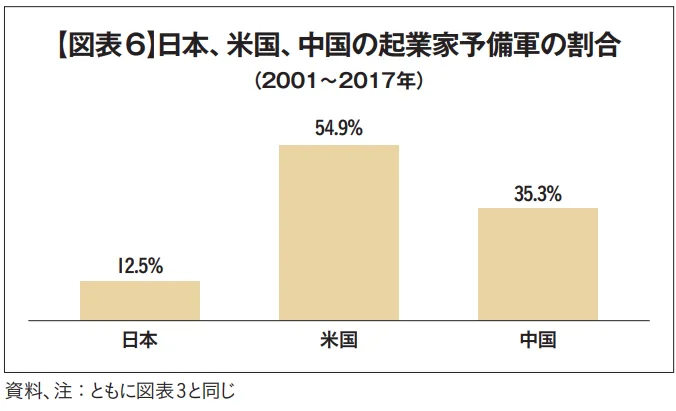
It also seems hard to say that the number of entrepreneurs themselves is increasing.
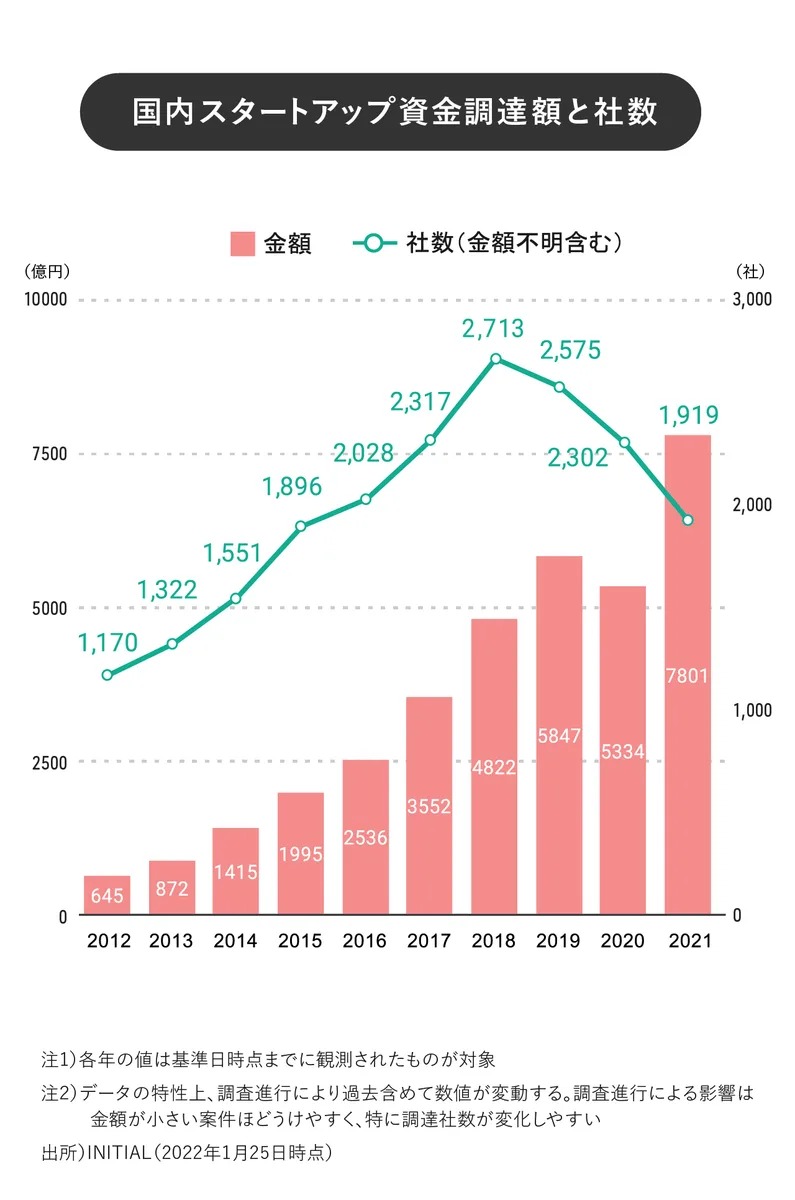
Looking at the situation surrounding entrepreneurship education, I think something needs to change in education as well.
What Should Change
I have written my views on the necessary changes in several separate articles. Each one runs long, so I have written them individually, and each item below links to the relevant one.
Educational outcomes
- Develop entrepreneurial qualities and competencies that can be used across all kinds of entrepreneurship
- Increase the number of entrepreneurs (by increasing the number of aspiring entrepreneurs)
Target audience (participants)
- Expand from higher education at universities and similar institutions to primary and secondary education
(However, to avoid burdening primary and secondary school teachers, who are extremely busy, make use of online and private-sector activities) - Expand participants to the target audience of entrepreneurship education in the broad sense
Course design
- Rather than teaching business knowledge and skills, keep in mind that this is a stage preceding things such as career education
- Make classes that promote students' learning, not teaching
- Taking into account the limits of classes, position classes as an opportunity to join a practical community of entrepreneurship
- Make classes centered on activity and value creation, not on lectures or simulated startups
- Rather than education based on intuition and experience, advance educational research as well while making use of research findings
Educational research
- Conduct research on entrepreneurship education in parallel
That sums up what I am thinking as of 2022.
There may be objections and counterarguments. I am still learning myself, so I would like to deepen my thinking by consulting the literature and through discussion.