"Become the One Who Draws the Frame of the Puzzle": How Startups Grow Through Co-Creation
This article was machine-translated from Japanese by AI (Claude). It may contain errors. Read the original Japanese article.
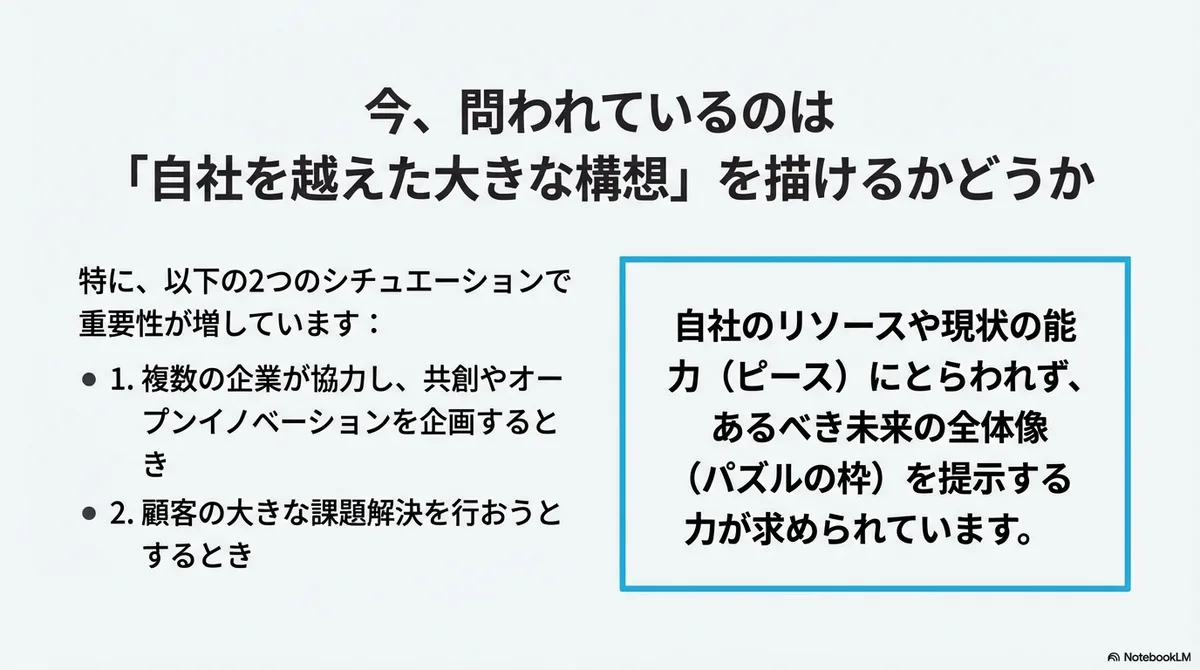
I think that "whether you can draw a big blueprint that goes beyond your own company" is becoming even more important now.
In particular,
- when multiple companies cooperate and aim for co-creation or open innovation
- when you try to solve a big problem for a customer
in situations like these, I feel that the ability to draw a big blueprint is being put to the test.
So in this article, I explain the importance of a blueprint in co-creation and problem solving, using the metaphor of a jigsaw puzzle, with a particular focus on startups.
Co-Creation: Filling In the Pieces for the Blueprint
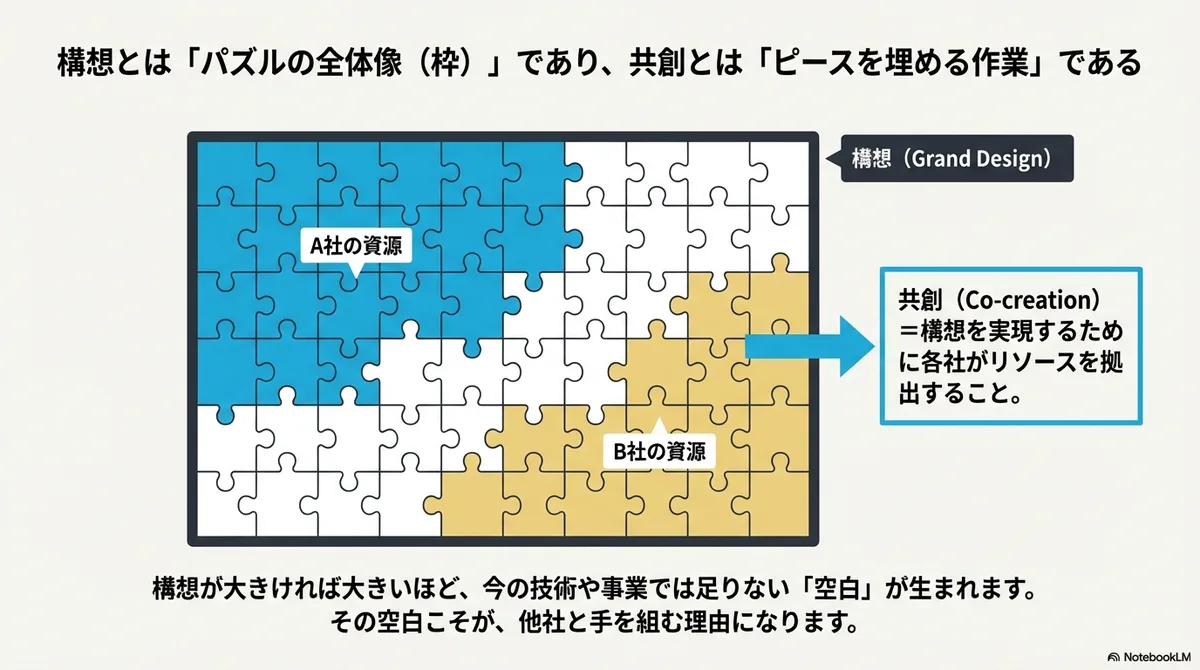
Picture a jigsaw puzzle. The overall picture and the frame of this puzzle are the "blueprint."
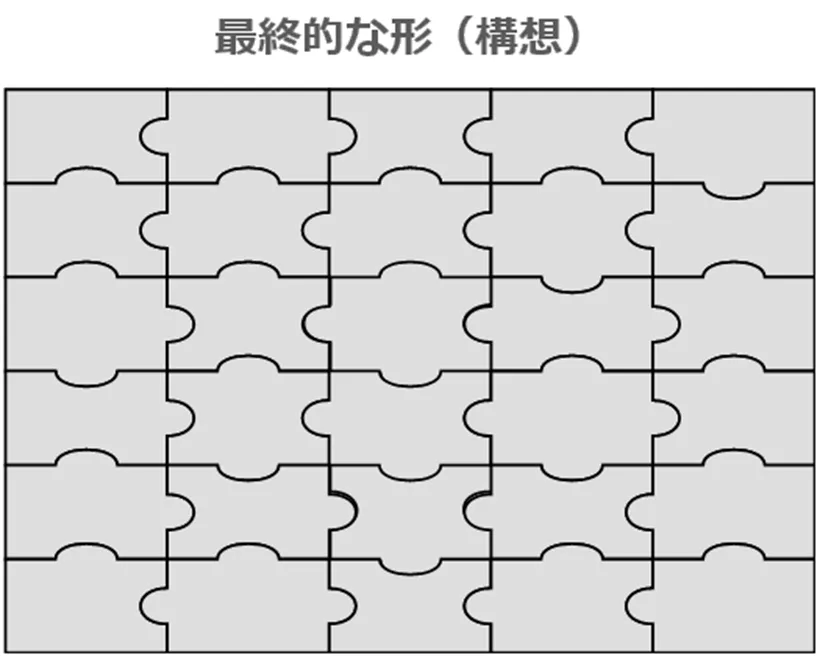
To realize that blueprint, each company contributes resources as pieces. This is what we can call co-creation.
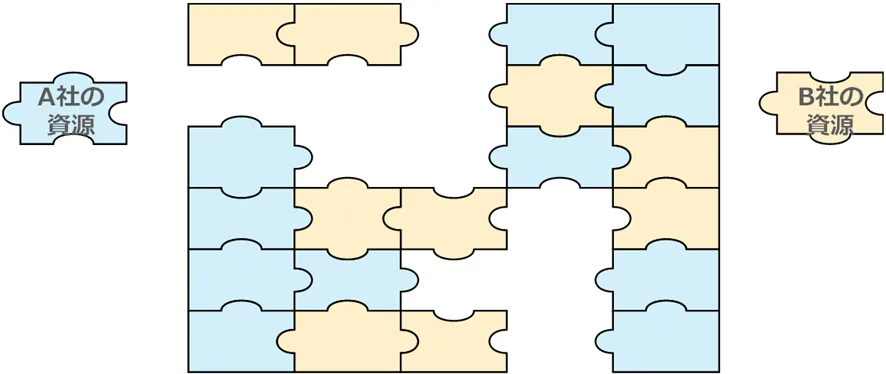
However, there are times when the current resources alone cannot fill all the pieces. The bigger the blueprint, the more it requires technologies that do not yet exist and businesses that do not yet exist, so the blank areas will be large.
In that case, you either bring in the missing pieces from elsewhere, or your own company grows to fill those blank areas.
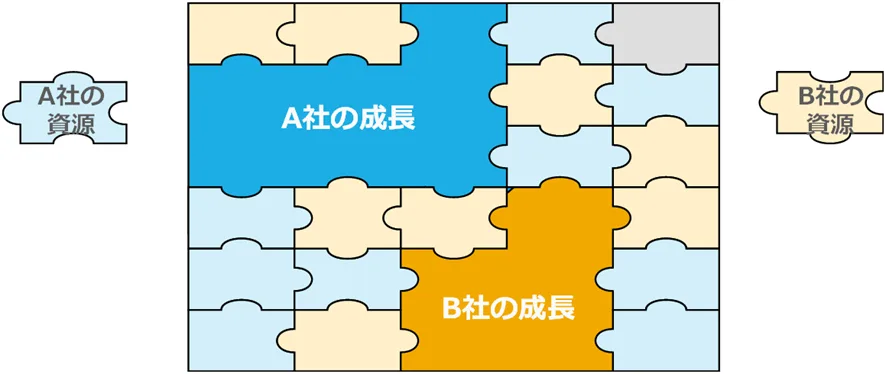
In other words, co-creation is an attempt to realize a blueprint that exceeds our own stature, and it can also be said to be an effort in which each party grows in the process.
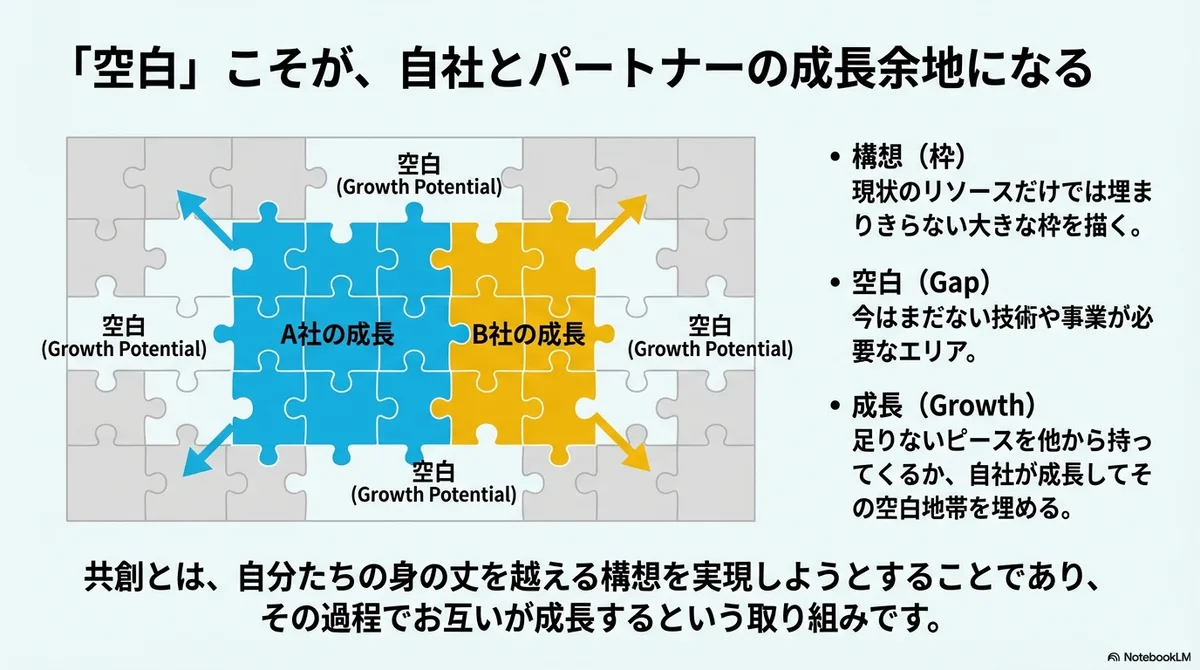
From this viewpoint, what a startup should do for its own growth is
- to draw a blueprint that goes beyond the current capabilities of its own company and of other companies, and
- to chart a path along which its own company grows large in the course of realizing it.
I think two shifts that are currently under way among startups, in particular, are increasing the importance of this kind of blueprint and of co-creation.
Shift 1: From "Problems on the Front Line" to "Problems of the Company"
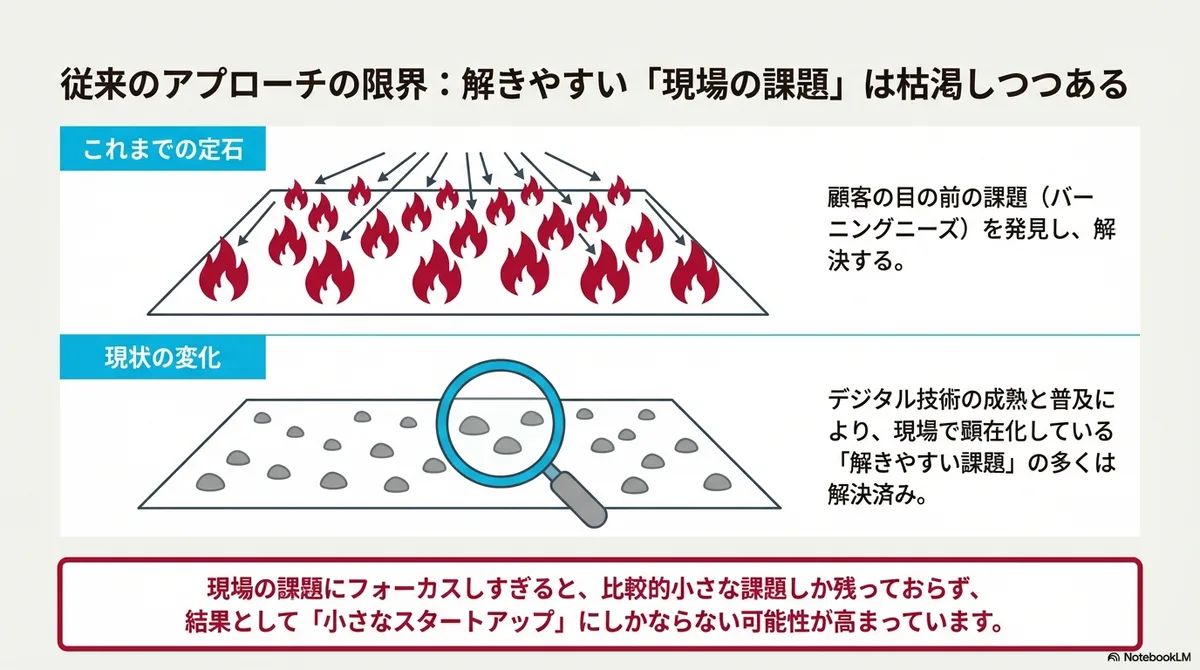
For conventional startups, the key was to discover and solve the problems and burning needs right in front of customers. With the maturing and spread of digital technology, front-line problems that had gone unsolved had become solvable, and solving them could make a startup into a large company.
However, now that many of the problems that are easy to solve with current digital technology, and many of the problems that have already become apparent on the front line, have been solved through the efforts of those who came before us, the problems that remain and can be solved have become mostly relatively small ones. As a result, there is a growing possibility that focusing too much on front-line problems will only produce a small startup. (Unless generative AI fundamentally changes conventional software, that is.)
When that happens, a shift occurs from problem discovery to problem posing, in which the proposing side raises, ahead of the customer, problems that have not yet become apparent on the customer's side.
But if the problem you set at that point is small, the difference in progress created when it is solved will also be small.
For that reason, the proposal becomes one of solving problems that concern the company as a whole, or larger and more distant strategic problems, rather than solving the problems of the people on the front line.
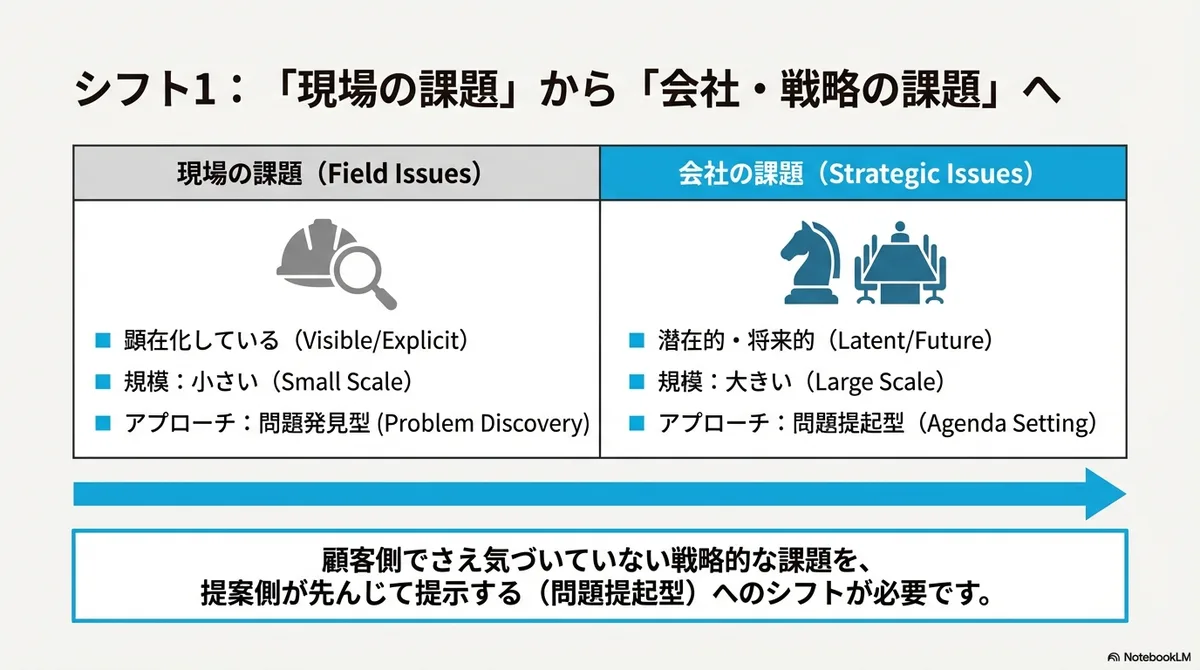
In fact, the growing SaaS startups around me either go after large enterprise customers, try to solve the strategic problems of their customer companies, or do both, and in doing so they seem to tend to persuade customers by talking about a big blueprint that goes beyond their own business, such as what the industry ought to look like.
The piece I wrote earlier, Breaking Away from the Problem-Solving Paradigm, is in the same vein.
Shift 2: From Software to Deep Tech
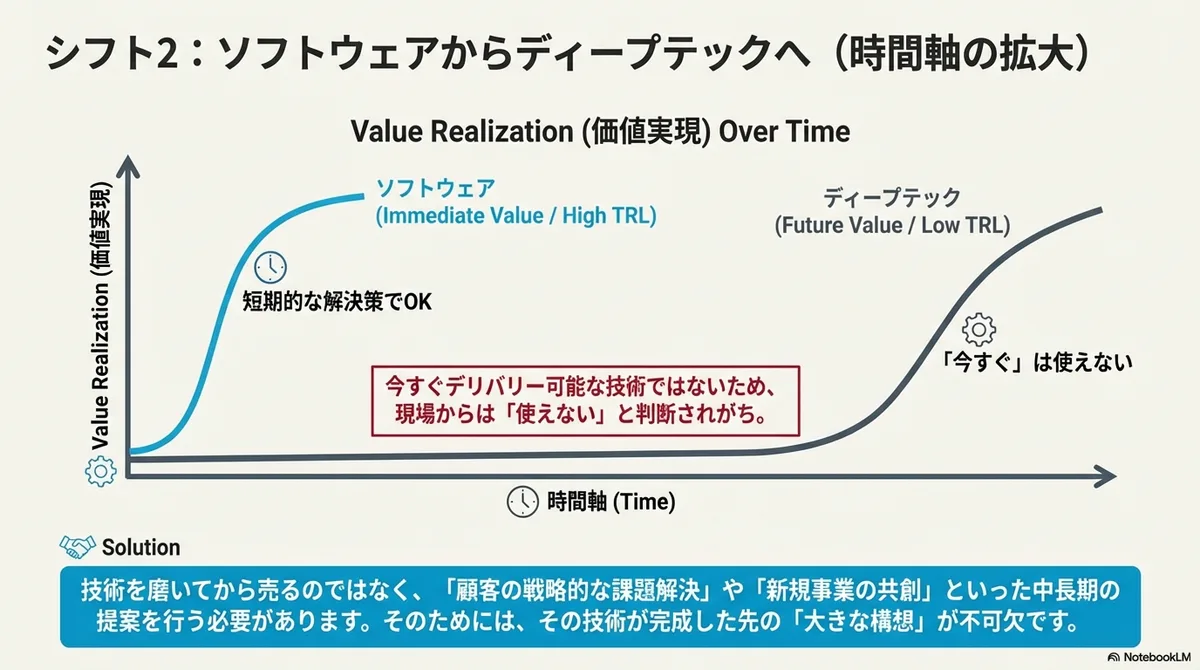
What is being expected of Japan's startup ecosystem these days is the field known as deep tech. I think this kind of blueprint is also being demanded in deep tech, which often uses cutting-edge technology. (Though I think drug discovery and the like are different.)
First, the technologies that deep tech startups work on often have a low technology readiness level, so they are ill-suited to solving "right now" problems, and even if you bring a technology of low maturity to a business site, you will be told it is "unusable." This is because what the front line wants is a technology that can solve the problem in front of it and can be delivered right now (8 to 9 in terms of TRL).
In that case, the following responses are needed:
- Polish the technology intensively in a short period, raise it to that level, and solve the problem
- Go and solve the customer's medium- to long-term problems
However, the former is rarely feasible, and in most cases it will be the latter approach.
That makes it necessary to make medium- to long-term proposals, such as solving the customer's strategic problems or building a new business of the customer's company together with them. And for the startup itself to grow, the blueprint it proposes will need to be big enough.
In other words, the less technically mature the deep tech is, the more you have to go after the customer's medium- to long-term problems and company-wide problems, or the conversation will tend not to mesh.
Software products basically sit at TRL 8 to 9, and once the problem is understood, there is a tendency that a solution can be built more or less, so this is very different from the startup approach for software.
Conceiving a Business
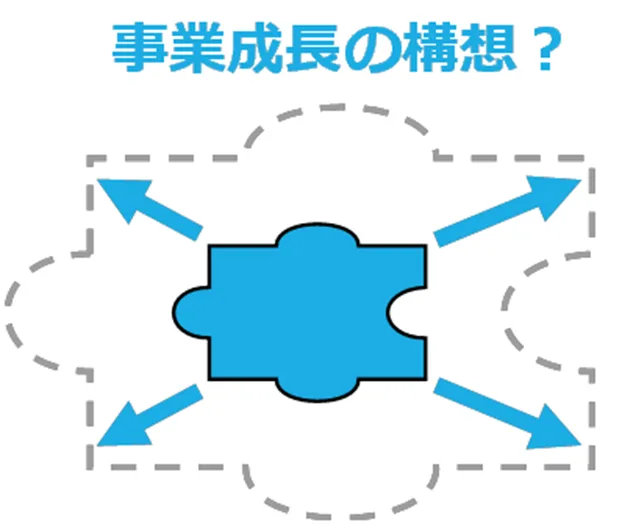
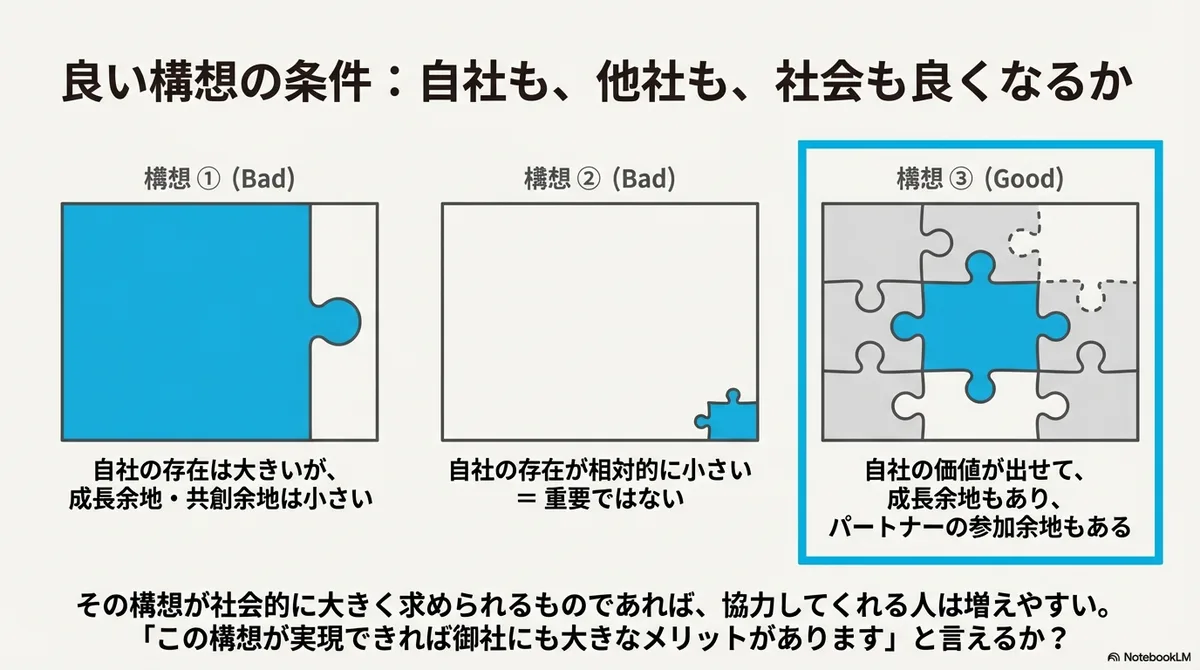
We usually think up blueprints such as business plans for the growth of our own business. What we usually think about then is how to make our own company, as one piece in society, bigger, or how to change the bumps and notches of our own piece so that it fits the customer company.
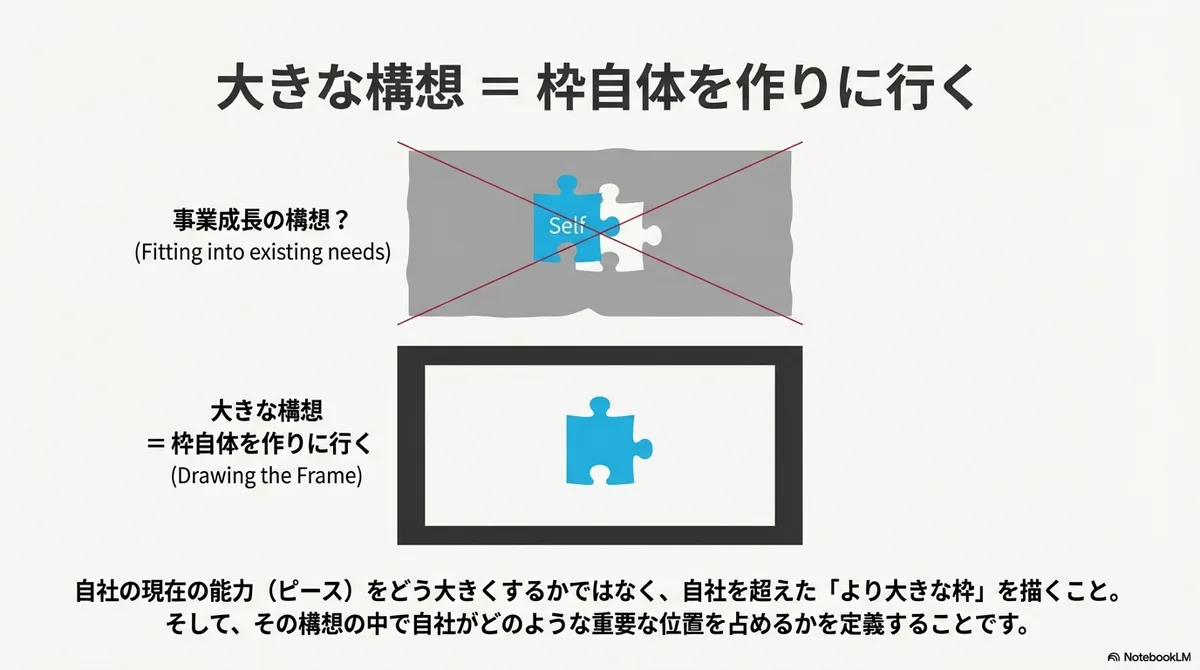
But as I have explained so far, I think the big "big blueprint" needed for co-creation and for solving medium- to long-term problems is not that, but rather drawing a larger frame that goes beyond our own company.
On top of that, talking about what meaning we have within that blueprint and how important we are, that is, setting a context and a blueprint in which our own company is highly valued, is what determines the value of our business and its room for growth.
For example, even the same piece has a different value if the blueprint or context differs. That said, if it is a blueprint in which only our own company benefits, no one will follow. If the blueprint is something society greatly needs, more people will tend to cooperate.
I think that whether you can draw a blueprint that is good for your own company, for other companies, and for society is an important skill for solving the customer's "company problems" while co-creating, and for building a larger industry.
The People You Talk To Change, Too
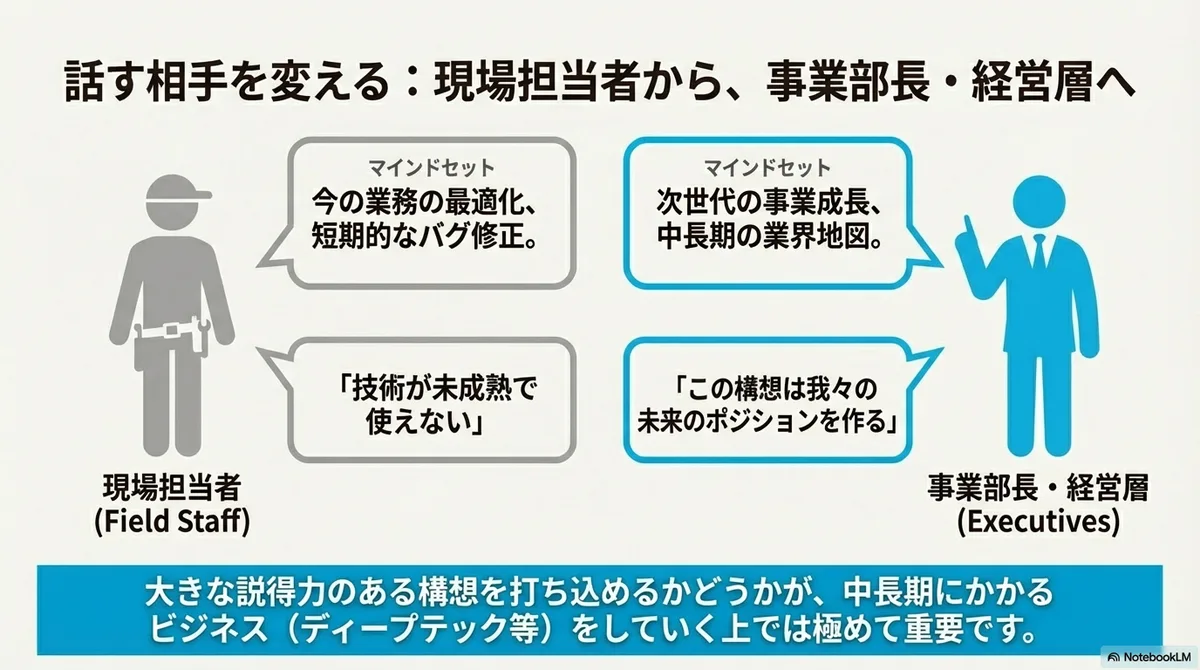
When you think about business centered on this kind of blueprint, "the people a startup should talk to" also change.
Until now, the people startups talked to were mainly those within the customer company, especially the people in charge of the front line. However, many business units and front-line staff are designed to aim at raising profits by optimizing the current business and at solving problems in the short term, so this kind of blueprint probably often does not resonate with them. Even if there are medium- to long-term strategic problems, few people at the level of the front-line business unit are thinking about them, and in most cases there is no incentive design for solving them.
The people who think about strategy and medium- to long-term problems are usually the heads of business units who are thinking about the next generation of business growth, and the executives above them, and unless you propose to those people, such medium- to long-term talk will not land. I think how well you can drive a big, persuasive blueprint into the minds of such people is very important for doing business that spans the medium to long term, and how to have a network that lets you make proposals there will probably become even more important. (Or else startups could adopt one another.)
In fact, I often hear from deep tech startup founders that "we made a proposal to the same company, and it didn't resonate with the front line, but it resonated with the executives." Rather, if you take it to the front line, a technology with potential may even get rounded down into a small solution.
In the end, it is the front line that moves things forward, so listening to the voices of the customer's front line is of course important. At the same time, I think that how you draw a big blueprint, solve the customer's big problems, and get your company built into the customer's business strategy will be important for startups to grow rapidly from here on.
Startups Drawing the Blueprint
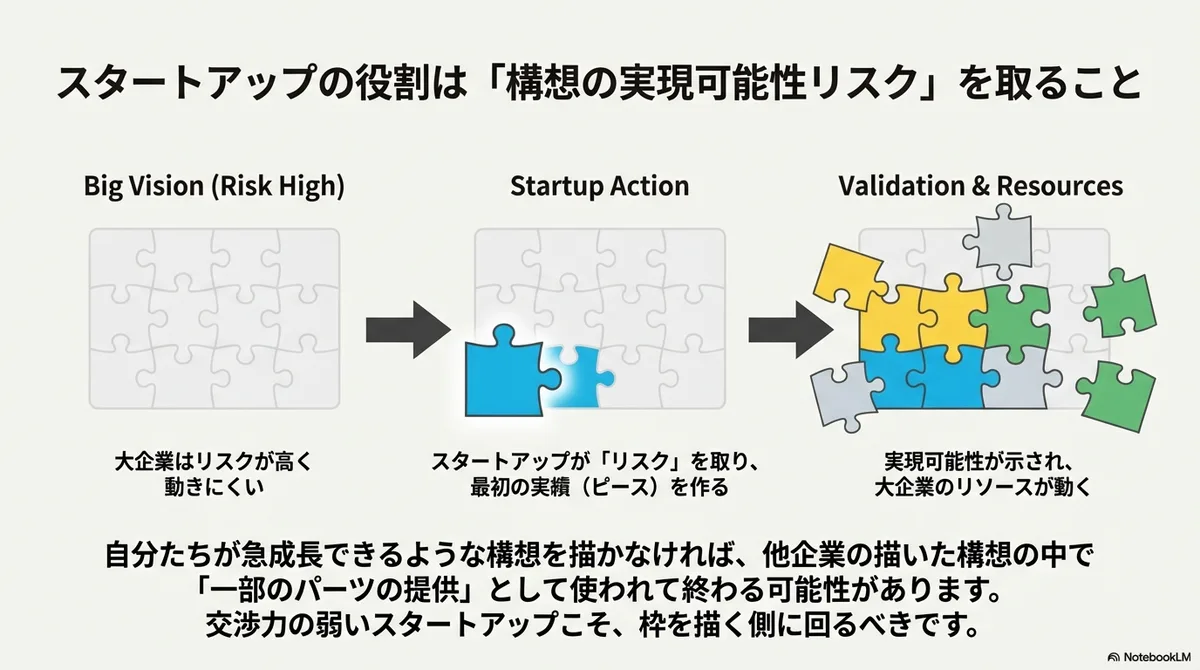
The role of drawing this blueprint can be played by either a large company or a startup. However, if a startup wants to grow rapidly, it must draw a blueprint that lets it grow rapidly. If it cannot, it is likely to end up merely being used as a supplier of some parts within a blueprint drawn by another company. This will be especially so the weaker a startup's bargaining power is.
Also, the bigger the blueprint, the higher the risk to its feasibility. Yet being able to take on such risk should be what society expects of startups.
Therefore, I think that only when a startup draws a larger blueprint that goes beyond its own business and also beyond the businesses of its partner companies, and makes a persuasive proposal such as "If this blueprint is realized, it will bring major benefits to your company as well. Let's grow together through this co-creation and realize this blueprint," will what its own business wanted to do move forward.
Of course, if you have no pieces at all and only talk about a blueprint, no one will get on board. At first you need a piece that serves as a small track record. Even then, it may start as a small co-creation. But I think that a blueprint beyond it that is exciting, wider, bigger, and attractive, not for the sake of your own business, together with a track record as a foothold, will lead to co-creation and customer acquisition.
I hear that on the side of existing Japanese companies, too, there are still few people who can draw such big blueprints. If so, that can also be called a good opportunity for startups to propose big blueprints.
Company Creation Also Starts with a Blueprint
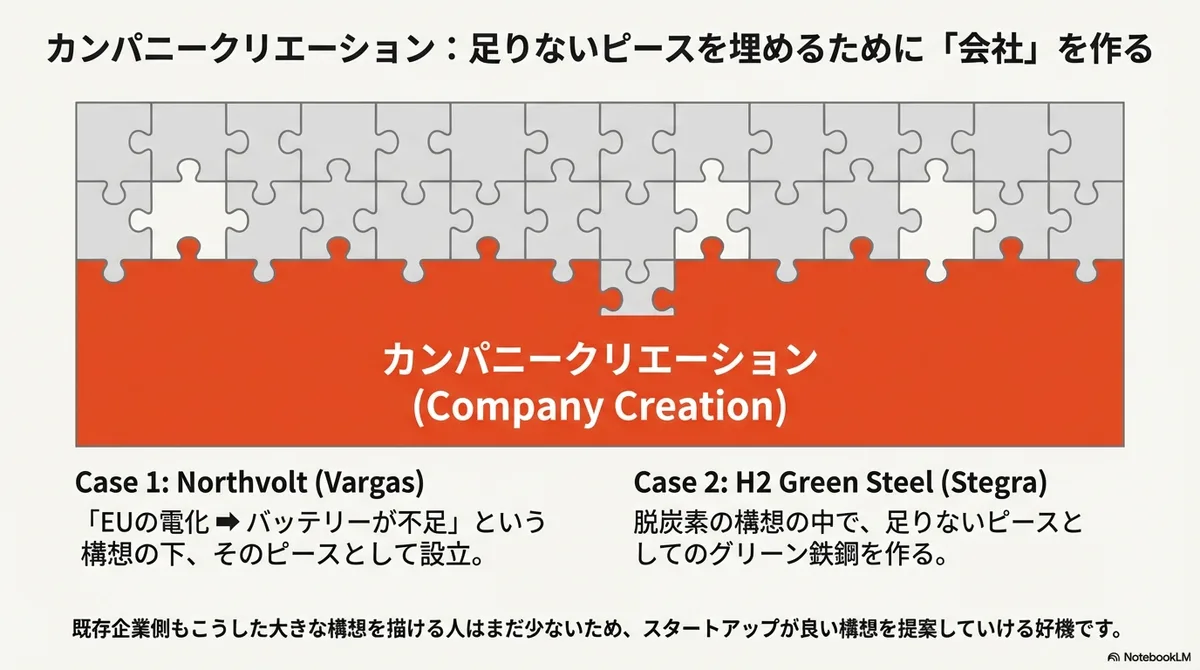
I think company creation also works in this way: it builds a big frame called a blueprint, and because a business as a piece within it is missing, it goes and creates that company.
For example, Vargas's Northvolt would be "electrification of the EU, so batteries are lacking," and likewise Stegra (H2 Green Steel) also appears to have been an initiative to go and make green steel as a missing piece within the blueprint of decarbonization.
Drawing a Blueprint of Future Industries as an Industrialist
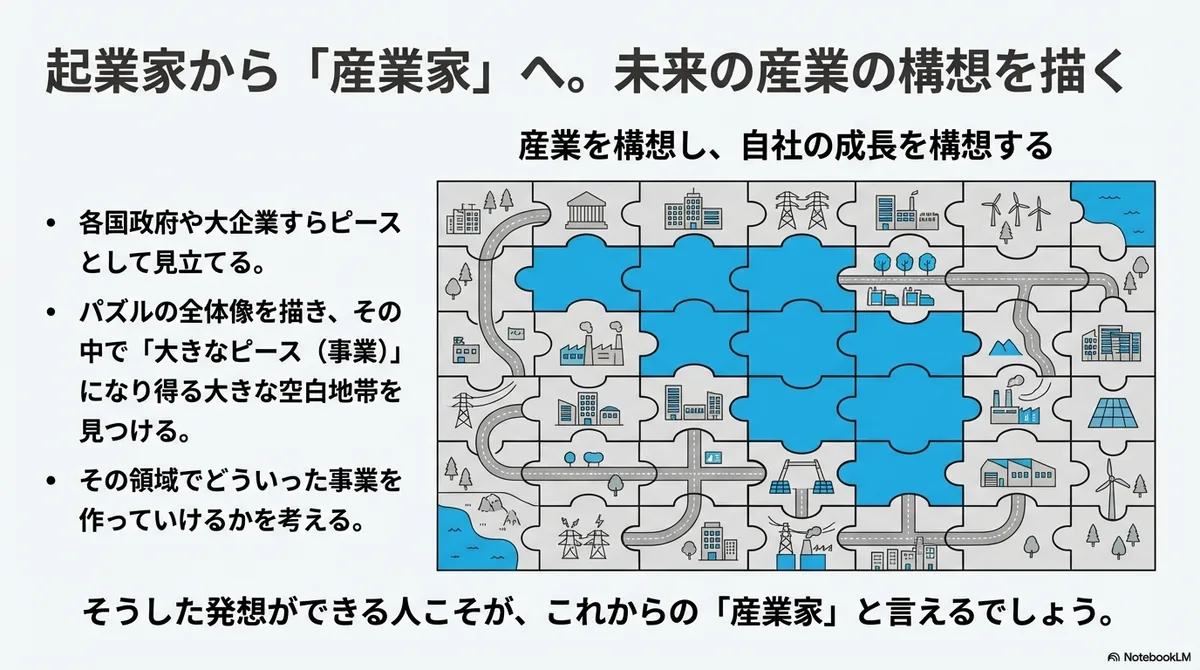
Earlier, I wrote an article titled "From Entrepreneurs to Industrialists."
In a sense, someone who can regard even national governments and large companies as pieces, draw the overall picture of the puzzle that serves as the frame of the blueprint, find within it the large blank areas that could become large pieces (businesses), and think about what kind of business a startup could build in those areas, is what we can call an industrialist.
When you draw such a big blueprint, it almost certainly becomes impossible to do it with your own company alone, so you are naturally forced into co-creation with other companies, and I think it also leads to open innovation.
Summary
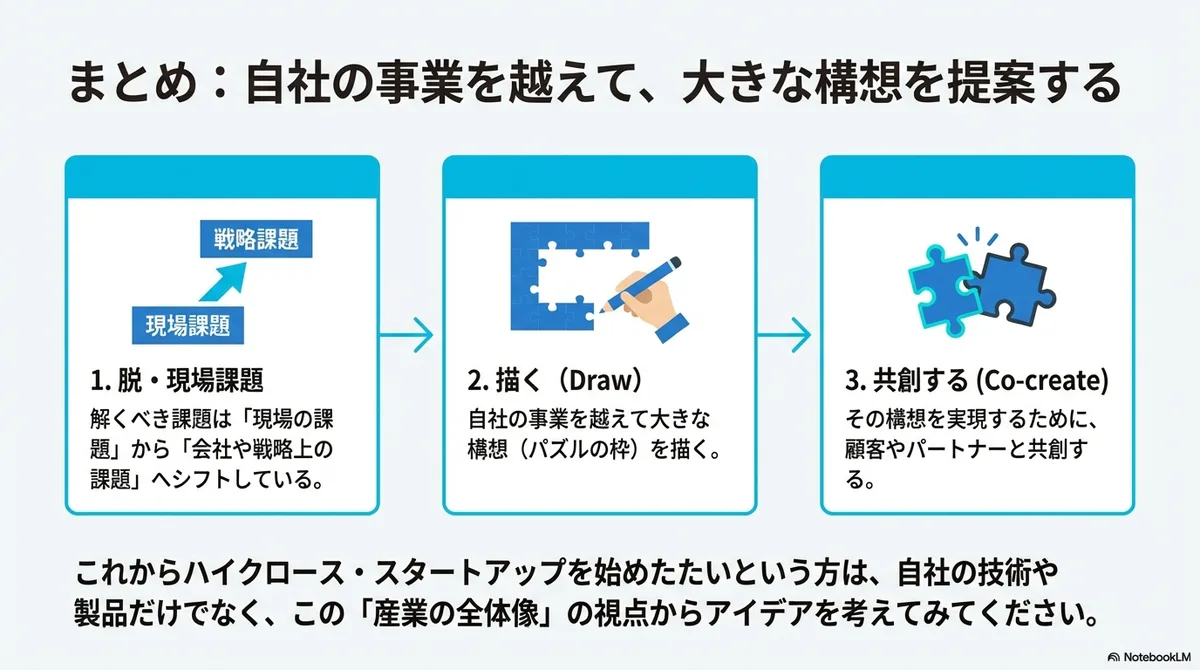
At a time when the customer problems to be solved are shifting from the customer's "front-line problems" to the customer's "company and strategic problems" (or rather, a time when startups cannot grow large unless they do so), I think it is becoming more important to draw and propose a big blueprint that goes beyond your own business and to co-create with customers.
In particular, those who want to start a high-growth startup from now on might want to think about ideas from this perspective as well.
I have touched on some of the methodology in past articles. For example, "Blueprinting the Future" and "Beyond Design Thinking 🎨🧠: Toward Grand Design 🗺️."
Also, in a book titled Resourcefulness (working title), I am trying to write about how to gather those pieces. If you are interested, please take a look at those articles and the book.