Abundance: A New Direction for the American Left
This article was machine-translated from Japanese by AI (Claude). It may contain errors. Read the original Japanese article.
The 2025 House of Councillors election is over, and I feel that Japanese politics is about to change significantly.
Meanwhile, the political landscape in the United States is also changing substantially. In particular, the Democratic Party, which is positioned on the left, is actively searching for and shifting toward its next agenda and political ideas in the wake of its defeat in the 2024 presidential election.
I thought these developments in the United States might serve as a useful reference for Japanese politics going forward, so I am introducing them here. For the latest information, The Democratic Party’s Troubles at the New York Times is the most detailed source, so please read that.
The Three Factions
Currently, three main factions have formed within the Democratic Party, and they are debating ahead of the 2026 midterm elections.
The three factions are as follows.
- The Abundance faction
- The Progressive faction
- The Establishment faction
I will introduce each one briefly.
(1) The Abundance Faction
This is the rising faction. Its intellectual foundation is the book Abundance, written by Ezra Klein and Derek Thompson (I have introduced Abundance several times on this blog. I expect it will probably be translated, but as a review you can read in Japanese, Wired is detailed).
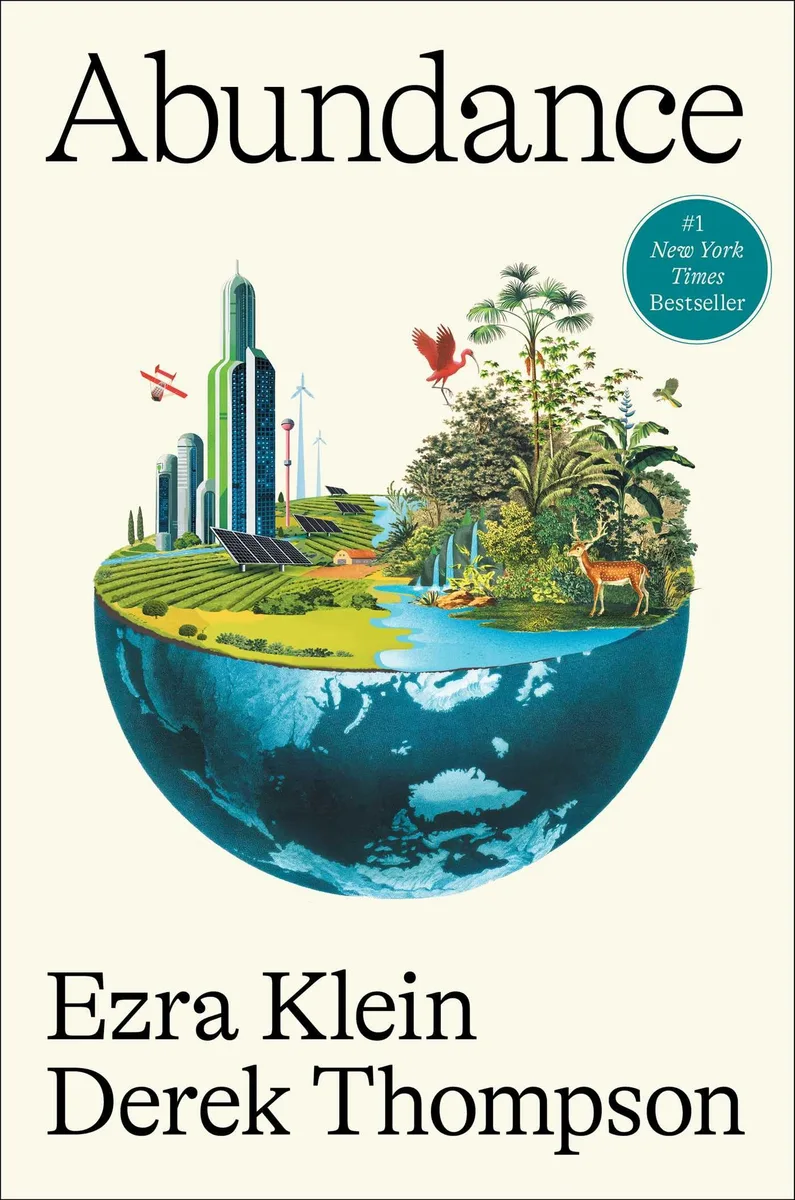
https://www.amazon.com/Abundance-Progress-Takes-Ezra-Klein/dp/1668023482/
The position of this faction is that, rather than advancing the kinds of regulation and limits on government power that progressives call for, government should be given the capacity to accomplish more, and a prosperous country should be built.
More specifically, it focuses on producing more supply, starting with housing and energy, and to that end it recommends promoting innovation and deregulating. It is sometimes called the "left that builds" or "supply-side progressivism," and you also see the rallying cry "Build, baby, build."
On the other hand, because it calls for deregulation and the like in order to increase supply capacity, it tends to meet with pushback from the existing liberal wing. Another weakness is that, overall, doubts remain about its redistribution policies and the details of their feasibility.
Even so, in recent developments, a bipartisan Abundance Caucus has been formed, and Governor Newsome of California, who is said to be preparing for the next presidential election, signed a housing and infrastructure bill at the end of June this year, seemingly following this Abundance agenda. Former President Obama and others also appear to be in favor, so this is a faction gaining momentum.
(2) The Progressive Faction
This faction is well known for figures such as Sanders and AOC, and it is a group close to what is called the far left. It also actively criticizes Israel.
This time, Mamdani won the Democratic primary for New York City mayor and defeated former governor Cuomo, and the faction is regaining momentum. Mamdani is young, at 33, and he won the support of young people and workers with pledges that could be called radical or socialist, such as rent freezes, free buses, and city-run grocery stores. (That said, since his opponent Cuomo resigned over sexual harassment allegations, there seems to have been a strong public will to prevent his comeback as well.)
It is a faction strong in redistribution policies and grassroots political participation, but it is said to be a group about which some doubts remain regarding its practical capability. In terms of policy, it can also be said to hold positions that tend to be at odds with the Abundance faction.
(3) The Establishment Faction
This is the so-called existing establishment of the Democratic Party.
In its current activity, centered on former senior White House officials, think tanks, and others, it is trying to launch "Project 2029" as a policy package.
Think tanks such as Third Way have also prepared a fund for the center-left and are trying to rebuild the ecosystem.
While its practical capability is high, this group has a weakness in the form of criticism from younger members within the Democratic Party. The failure of generational change to advance is also a factor that causes voters to abandon a party.
Summary of the Three Factions
What all three of these factions share is, probably, the recognition that today’s Democratic Party suffers from an absence of a positive vision, and that it needs to search for new ways of communicating and engaging people.
How to draw and communicate this vision seems likely to be the major challenge ahead of the 2026 midterm elections.
(This article drew heavily on Vox’s summary.)
Implications for Japan
Having looked at the situation in the United States so far, if we turn to Japan, it seems to me that the 2025 House of Councillors election was less about right versus left, or conservative versus progressive, than "an election that the established parties lost."
In response, the established parties will probably now have to search for their positions, as the American Democratic Party is doing. But I think that, beyond debates about "moving further right" or "moving further left," putting forward a new direction like Abundance may be one direction that voters want, and that is why I introduced it in this article.
(However, some of the policies advocated under Abundance do not apply to Japan in many respects, so it is not a matter of simply bringing them over as they are.)
At the same time, as the party system becomes more multi-party, the responsibility of the opposition side will grow from here on. In that context, I think what will be asked is how each party thinks about its vision and grand design for the country in the first place.
Over the past few months, I have written articles about It's time to Rebuild and changes in the world. It seems to me that Japanese politics, too, is reaching a time for rebuilding.
It can be seen as an increase in uncertainty, but at the same time, just as startups treat uncertainty as an opportunity, this political uncertainty can also be seen as an opportunity for Japanese society.
That is precisely why I think we need to discuss anew what kind of society we want to build, and make efforts to realize it. Conversely, if we neglect those efforts, the will of those who want to change things in a particular direction will reach society, and society will change in that direction, which makes this a frightening time as well.
I hope that discussion in Japan will move forward, following the American debates about better visions and new ways of engaging people a little behind them, and I hope to contribute to it even in some small way.