A Typology of "Company Creation"
This article was machine-translated from Japanese by AI (Claude). It may contain errors. Read the original Japanese article.
I have started hearing the terms "company creation" and "Venture Creation Model." However, these terms seem to be used quite broadly, so for the sake of future discussion I would like to organize them in my own way.
Introduction
When an entrepreneur starts a new company, that is, in a sense, "company creation." After all, they are creating a company.
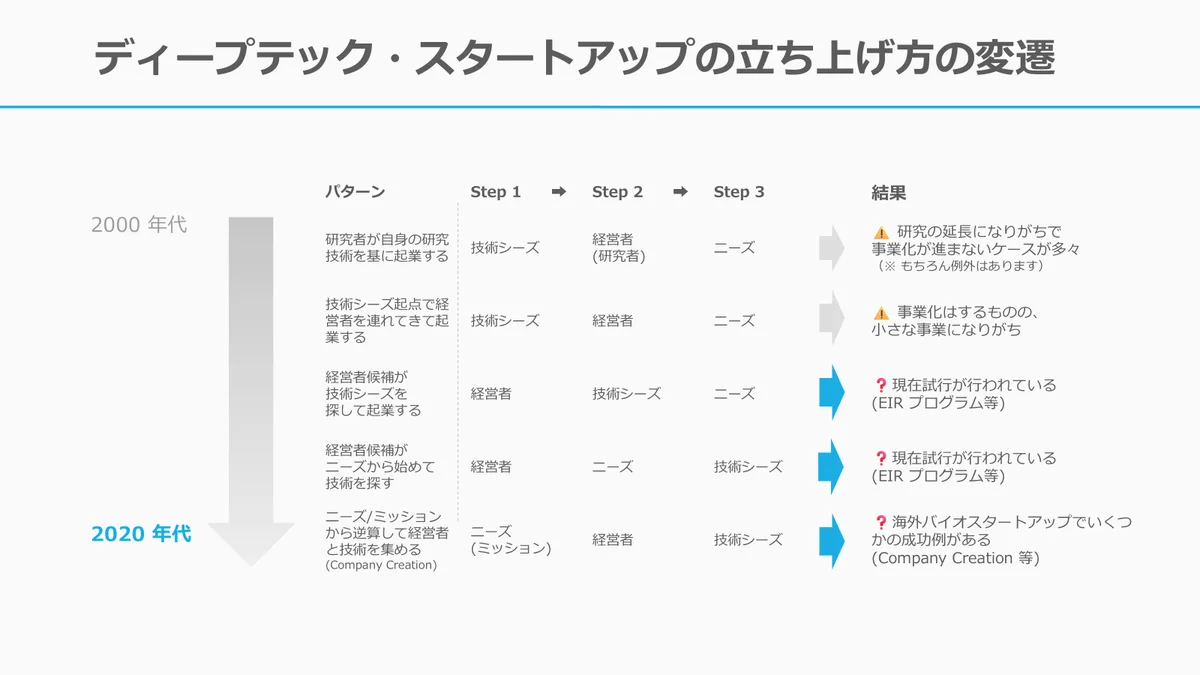
Yet the fact that the new term "company creation" has begun to be used is probably because people want to point to a style of founding that differs from ordinary entrepreneurship.
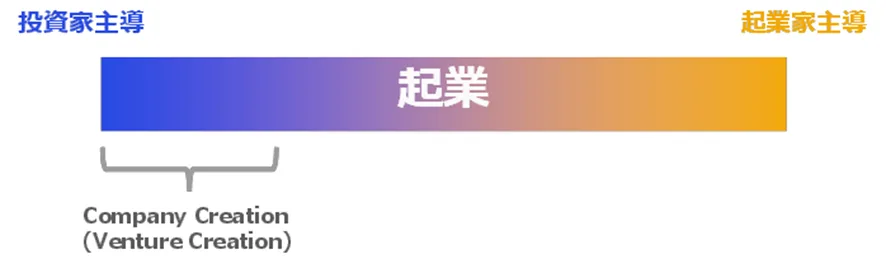
What makes that style different is that a player "other than the entrepreneur" leads the creation of the company. In other words, I think of company creation as "a model in which players other than entrepreneurs (investors, supporters, and so on) take charge of the whole process, including the idea, team formation, initial validation, and governance design, and lead the founding."
Sutter Hill Ventures is an example. The investor side led problem setting and hypothesis testing, Mike Speiser of Sutter Hill served as the founding CEO in the early days (2012–2014), and after the product and the first customers were up and running, an outside executive was brought in. In this way it took the lead in growing Snowflake.
That said, the degree of leadership comes in gradations, and there is some ambiguity about whether something counts as company creation. Considering concrete examples, it might look like this.
- An entrepreneur has already begun preparing to start a company, and investors and others support them
➡ Closer to ordinary support and investment activity than to company creation - An investor finds a researcher's research, the researcher agrees to start a company, the investor side brings in an entrepreneur, and the entrepreneur sets the strategy
➡ Leans toward company creation, but if the entrepreneur sets the strategy, it is debatable whether it can be called company creation - An investor finds a researcher's research, the researcher agrees to start a company, and the investor sets the strategy
➡ Leans toward company creation - An investor leads the technology development and the company's strategy, and brings in an entrepreneur at the end
➡ Very much company creation
So I do think there are gradations in whether something counts as company creation. But if we are going to prepare a special term, it is better to limit its meaning to some extent, and in that case I think the common thread is that "players other than the entrepreneur lead to a considerable degree."
A Typology of Company Creation
Organizing a typology of company creation from here will make the methodologies of company creation easier to understand.
First, for the typology, I will sort it into three types based on
- "What is the starting point?"
On top of that, because the fields in which the term company creation is used are often technology-driven fields other than IT, I will organize it from the perspectives of
- "Which TRL of technology is used?"
- "What is the time horizon?"
- "What kind of risk is taken?"
Summarized in a table, it looks like this.
| Starting point | Approximate TRL | Timeline | Main risk | Representative examples |
|---|---|---|---|---|
| Technology-driven | 1–5 | 7–10 years | Technology | Flagship, etc. |
| Demand-driven | 7–9 | 2–5 years | Scale, operations, financing | Vargas, etc. |
| Outcome-driven | 4–7 | 7–10 years | Technology + market | DSV, etc. |
① "Technology"-driven
- TRL - 1 to 3
- Target period - 7 to 10 years
- Main risk - Technology development
- Main examples - Flagship Pioneering, Third Rock Ventures, Atlas, Versant, RA
In drug discovery, where the medical unmet needs are reasonably well understood and the market is large, the main risk is "whether the technology can be built." Drug discovery in particular has a fairly well-defined process through to approval, and once something can be made, scaling up is relatively easy, so a distinctive feature is that market-derived risk is relatively low.
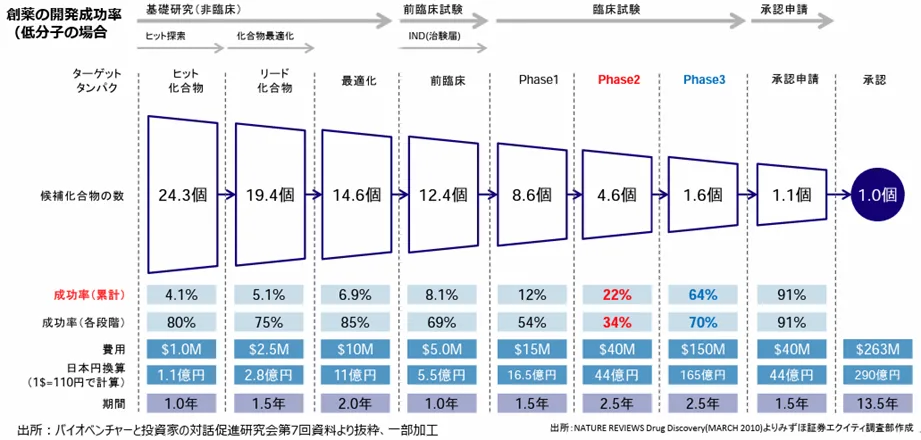
https://www.kantei.go.jp/jp/singi/kenkouiryou/iyakuhin/dai5/siryou1-3-6.pdf
An example of company creation in this area is Flagship Pioneering. The first phase, called Explorations, in which they think about "What if?", is probably around TRL 1 to 3, and once it becomes ProtoCos it is roughly 4 to 5, I imagine (the TRLs are only my guess). At Flagship and similar firms, the effort seems to be about the VC itself raising those TRLs, for example by conducting scientific experiments.
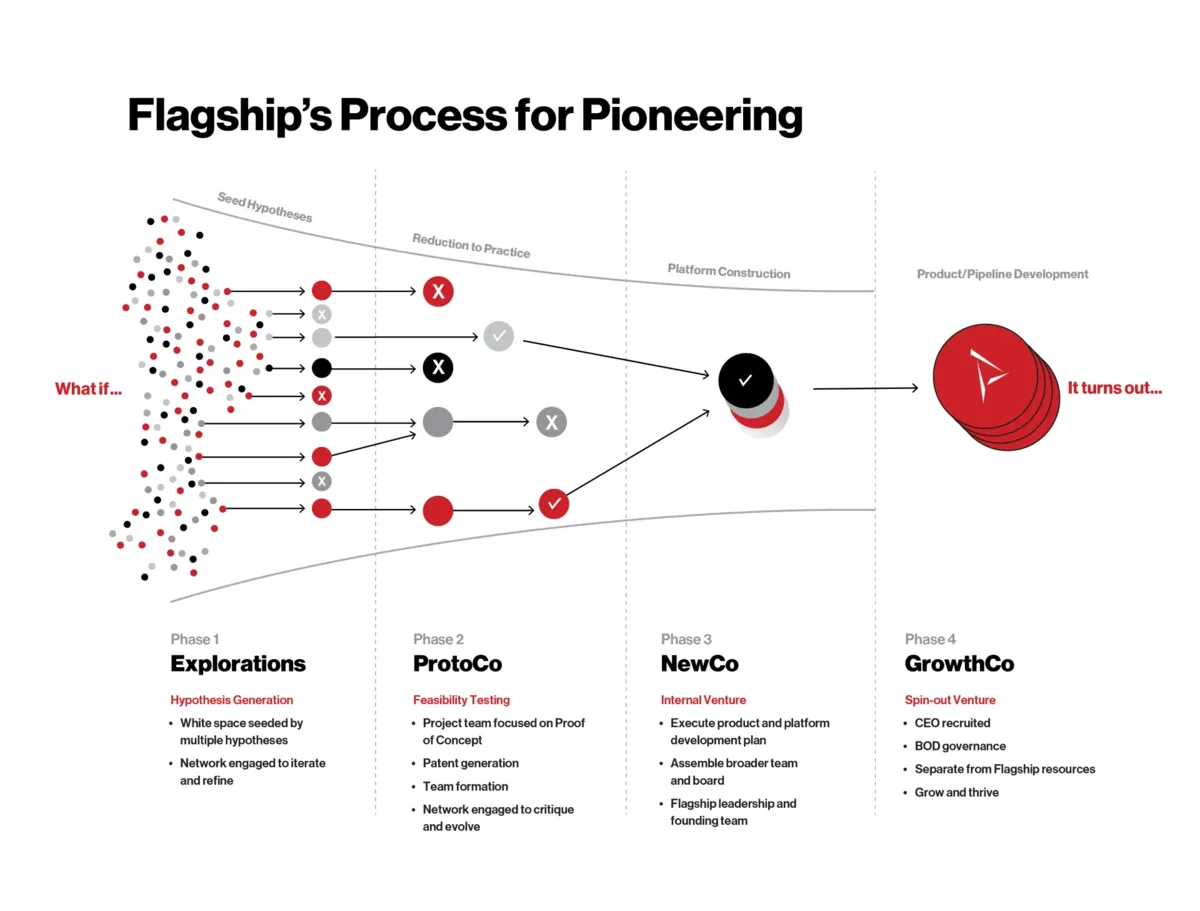
Because there are technology seeds, this is a very easy-to-understand form of company creation, and I suspect that most company creation going forward will also be of this technology-driven kind, and in the healthcare domain.
However, I am not very involved in healthcare at the moment (it tends to be lumped together under the label of deep tech, but my understanding is that it is quite a weird domain), so I recommend asking someone more knowledgeable for details.
② "Demand"-driven
- TRL - 7 to 9
- Target period - 2 to 5 years
- Main risk - Scaling, operations, financing
- Main example - Vargas
The companies that Vargas has created (Northvolt, Stegra, Syre, Aira, and others) seem to follow mainly this demand-driven model. They do not take much technology risk. Based on technology with a high TRL, they take on risks in mass production (scaling) and financing, and they are inventive in the methods for mitigating those risks (offtake contracts from the start, various financing methods, and so on). It also looks like a very PE-style approach.
What differs from the medical field is that it is necessary to raise not only the TRL but also the ARL. There is a lot of risk in dealing with various regulations and with the public, and responding to those will also be necessary.
What is distinctive is that the time horizon to initial demand is short and the volume is large. The companies Vargas has produced have mainly secured green demand and then aimed for large-volume supply within, say, the next five years, pursuing vertical integration and a vertical ramp-up (including siting where green electricity is available and working with governments). This requires large-scale financing, and the startups that succeeded in it produced unicorns all at once.
On the other hand, Northvolt did not do well and filed for bankruptcy in 2025. Various factors were involved in Northvolt's failure: technology development and mass production did not connect well, it faced the difficulty of ramping up mass production (yield and operations), there were supply-side problems such as manufacturing know-how no longer remaining in Europe, and on the demand side demand fell more sharply than expected. Still, it is a case that makes one feel how difficult it is to combine new technology with mass production in a short period.
I have organized this approach as "open innovation from the demand side" in articles such as the following.
③ "Outcome"-driven
- TRL - 4 to 7
- Target period - 7 to 10 years (?)
- Main risk - Technology development, scaling up
- Main example - Deep Science Ventures
Deep Science Ventures says that it thinks about things starting from outcomes. For example, they mention having created several negative-emission companies aiming for net zero, and an approach that uses an outcomes graph.
Judging from their articles, their stance seems to be that "a technology push does not work." I myself also feel that the areas where a technology-driven approach works are probably not that many.
DSV's portfolio companies are often deep tech, but because the number of investments is considerable (company creation should generally not be that numerous), they may be positioned somewhat closer to an investor.
Reorganizing the Three Types
In line with the three types above, if we organize IT startups, I think it would give the following risk-taking map. (For IT in general, it is mostly known that "it can technically be built," so I think the pattern of going after market risk is common.)
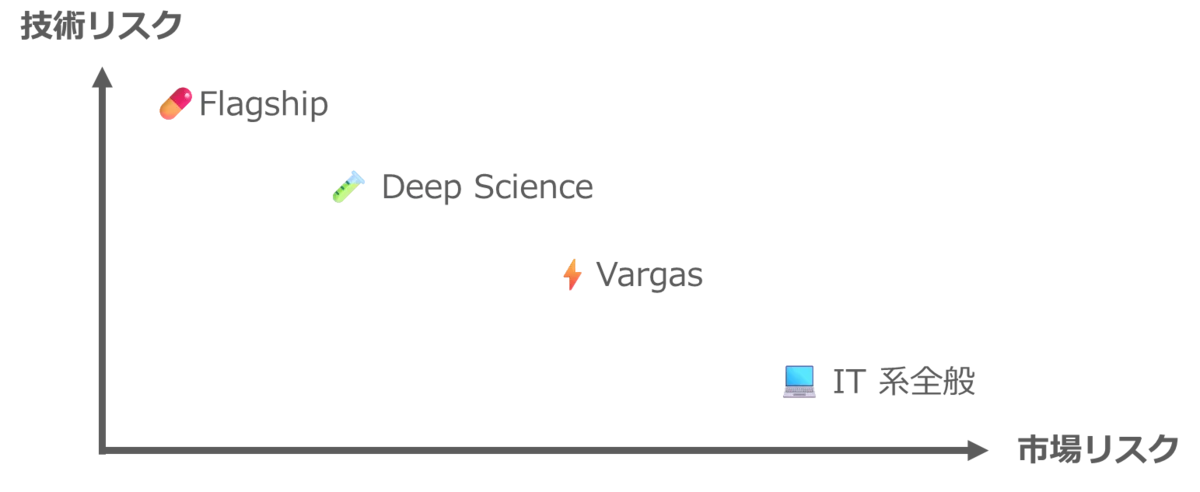
The time horizon of the demand each type is aiming at also differs a little, which can be illustrated as follows.

Things Close to Company Creation but Not Quite
In connection with company creation, several similar concepts also emerged at the same time, so I think it is better to sort them out. (※ I am not rejecting these approaches. I am only saying that they are conceptually different from company creation.)
❌ EIR (Entrepreneur in Residence)
The EIR, which has become more common in Japan too, could be called "talent-driven company creation," but considering that it is entrepreneur-led, I think it falls outside company creation. However, there are also cases in which the investor side has already come up with an idea and hires an entrepreneurial person as an EIR to fit into it, so I think in some cases it can be company creation.
❌ Venture Client Model
The venture client model starts from the "immediate" needs of a large company on the demand side, so it looks like a demand-driven model such as Vargas. However, it seems to differ in that it starts small rather than with a large-scale contract from the outset, and in that it procures from existing startups rather than creating a company from scratch.
From the startup's perspective, whether they are creating a new company or using an existing one, this model makes it easier to secure initial demand, but there also seems to be a danger of it becoming close to contract work. (It is different if the startup has a long-term strategy.)
Personally, it feels more fitting to position it as a program one step beyond a corporate accelerator program.
❌ Support for Setting Up Japanese Subsidiaries of Overseas Startups
This is a pattern in which a Japanese company is established starting from an overseas startup or large company. Although a company is created here too, I think it should be classified as a joint venture rather than company creation. Basically it is one part of the business strategy of the other side, namely "overseas (Japan) expansion for an overseas startup," and I think it is better to approach it from the standpoint of whether it has strategic value for Japan in promoting the attraction of overseas companies.
Company Creation Driven by "Mission"?
I have organized things up to this point. What all of these approaches have in common is that they begin with something like Flagship's What if...?
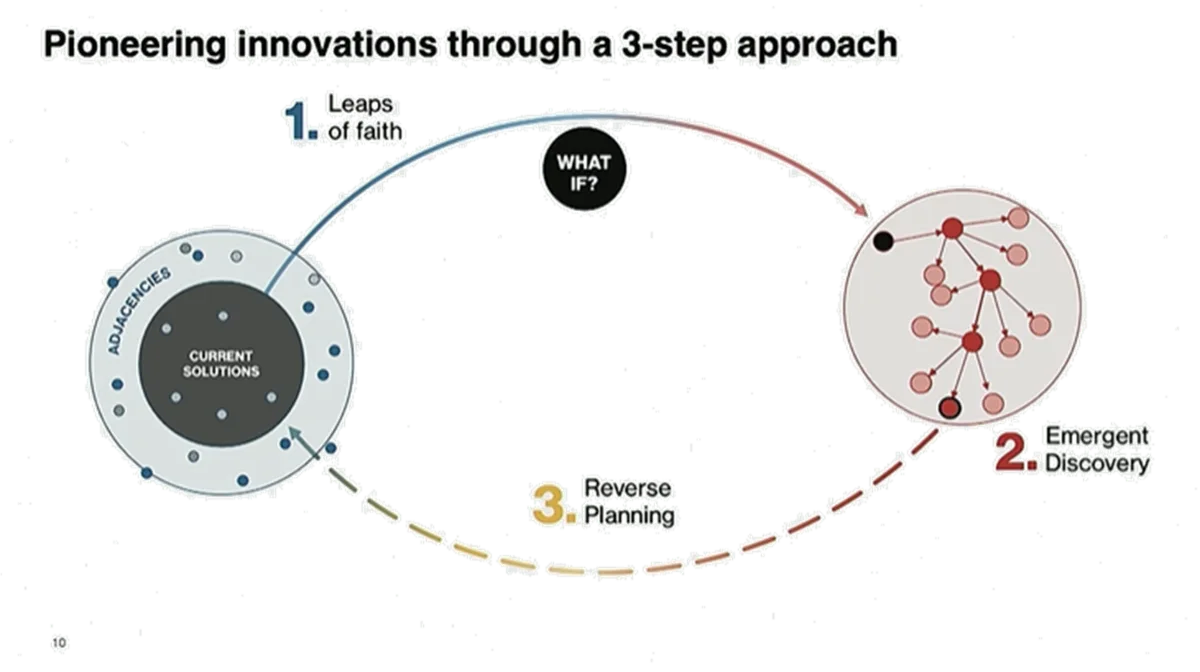
And because they take on large risks, I think each approach shows its ingenuity in clarifying the respective risks and deciding how to mitigate them (as shown in the figure below).
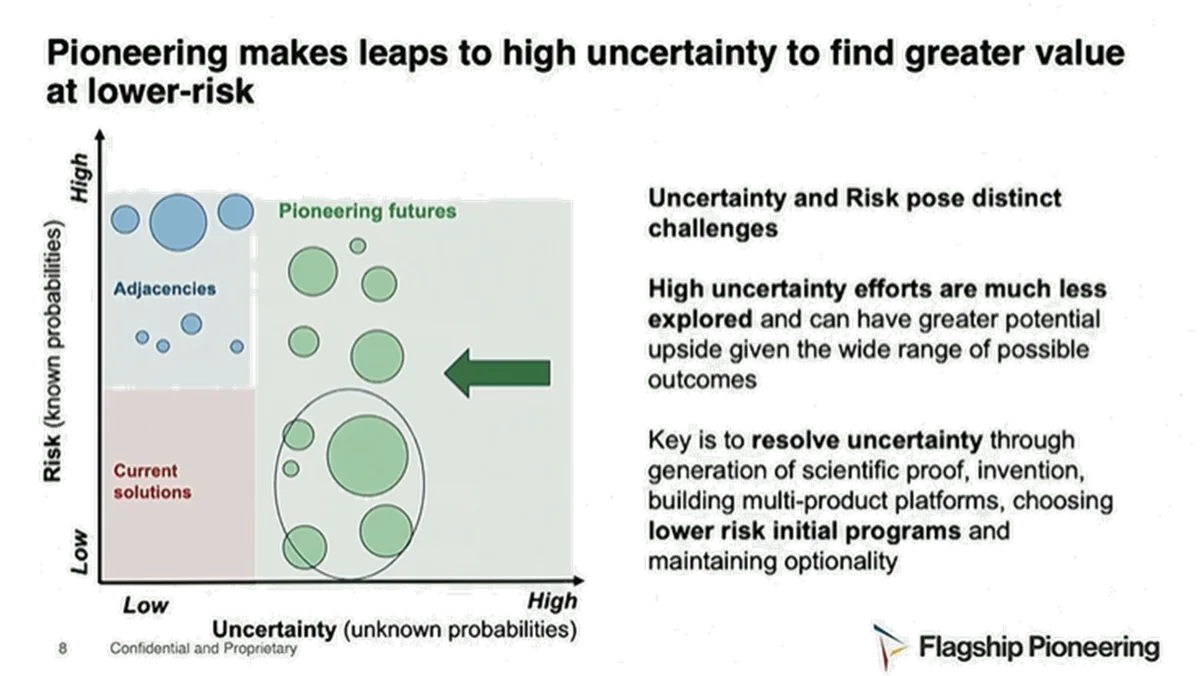
https://stvp.stanford.edu/clips/a-pioneering-approach-to-innovation/
Personally, I find the approach of Deep Science Ventures interesting. I am thinking that by developing this approach and skillfully combining it with the existing methods of Vargas and Flagship, mission-driven company creation may also be possible.
That is a type that
- gathers stakeholders around global missions and national interests (for example, strategic indispensability in economic security), and
- has each stakeholder take on risk, thereby mitigating risk and building startups.
Vargas also has a strong mission orientation, but it targets demand that arises in the short term and tries to ramp up vertically for it. Instead, the time horizon could include short-term demand (which would call for a vertical ramp-up) while also making it possible to envision long-term future demand. Then we might be able to take on things whose TRL is still low, and in that case we could include the option of combining research and development such as DARPA/ARPA-E or FROs (Focused Research Organizations).
Because it allows for the long term, both technology risk and market risk become relatively high. But following Vargas, I think it may be possible to mitigate market risk and demand risk through offtake contracts and investment agreements with large companies, and, precisely because it is mission-oriented, to lower the ARL by structuring arrangements with government support as well (public procurement, price-gap support, and so on).
Even so, it is necessary to aim for very large financial and social returns commensurate with the risk (and to return those returns to the companies and governments that are also investors), so I think the fields that suit it are limited, but I feel it is worth trying as one type.
I think it would work especially in Japan, where manufacturing capabilities still remain and the government and companies can engage in dialogue, and it might make possible the originally intended division of roles in which startups take on high-risk and long-term bets.
| Starting point | Approximate TRL | Timeline | Main risk | Representative examples |
|---|---|---|---|---|
| Technology-driven | 1–5 | 7–10 years | Technology | Flagship, etc. |
| Demand-driven | 7–9 | 2–5 years | Scale, operations, financing | Vargas, etc. |
| Outcome-driven | 4–7 | 7–10 years | Technology + market | DSV, etc. |
| Mission-driven (proposed) | Variable | 5–15 years (variable) | Technology + market | OpenAI, etc.? |
When I talk about this, I get asked, "What are some examples?"
Personally, I think "OpenAI" can be cited as something close to this mission-oriented company creation (although it does not fit company creation in the narrow sense).
It was launched in 2015 as a nonprofit research institution, in the form of a consortium, by Sam Altman and others, who at the time were involved in an investor-like capacity. I think at first it was very close to a FRO, but now it is trying to change the world in a big way.
The same should be possible in other fields.
As for GX and Climate Tech as well, given the state of the decarbonization agenda in international politics and the rising construction costs around the world, it has become more likely that progress will be somewhat slower globally. Building a large-scale factory now, in particular, carries considerable risk.
However, over the medium to long term, the direction of decarbonization will probably not change. That means that in the near term it is no longer a race for scaling speed, and that, from a business standpoint, there is now time to spare for research and development. (※ However, climate change will not stop for us, so in climate terms we do not have time to spare. I think rapid scaling of available technologies should be considered much more.)
Considering this, I think there are still options for mission-oriented company creation in the GX field, and also beyond GX, in various medium- to long-term national challenges, I think it is fine to allow some trial and error in producing many companies that solve problems in a way that is not "many births, many deaths."
Conclusion
In this article I organized the definition and typology of company creation, and then touched a little on what I am thinking about now.
Considering the past, in which discussions and policy implementation about startups became unfocused as the word "startup" became polysemous, I worry that unless company creation is also used with some degree of organization, it will become a source of confusion in the future. I hope that the way I have organized it in this article is of some help.
Related articles