Technology (and Startups) for Freedom, Solidarity, and Security
This article was machine-translated from Japanese by AI (Claude). It may contain errors. Read the original Japanese article.

Summary by NotebookLM
It seems that a growing number of people are uncomfortable with Elon Musk's words, actions, and ideas, and have begun looking for a different EV (WSJ). Yet Tesla's convenience, including its ride quality, charging network, and self-driving technology, is far higher than that of its rivals, so even if you try to switch, there is hardly any alternative.
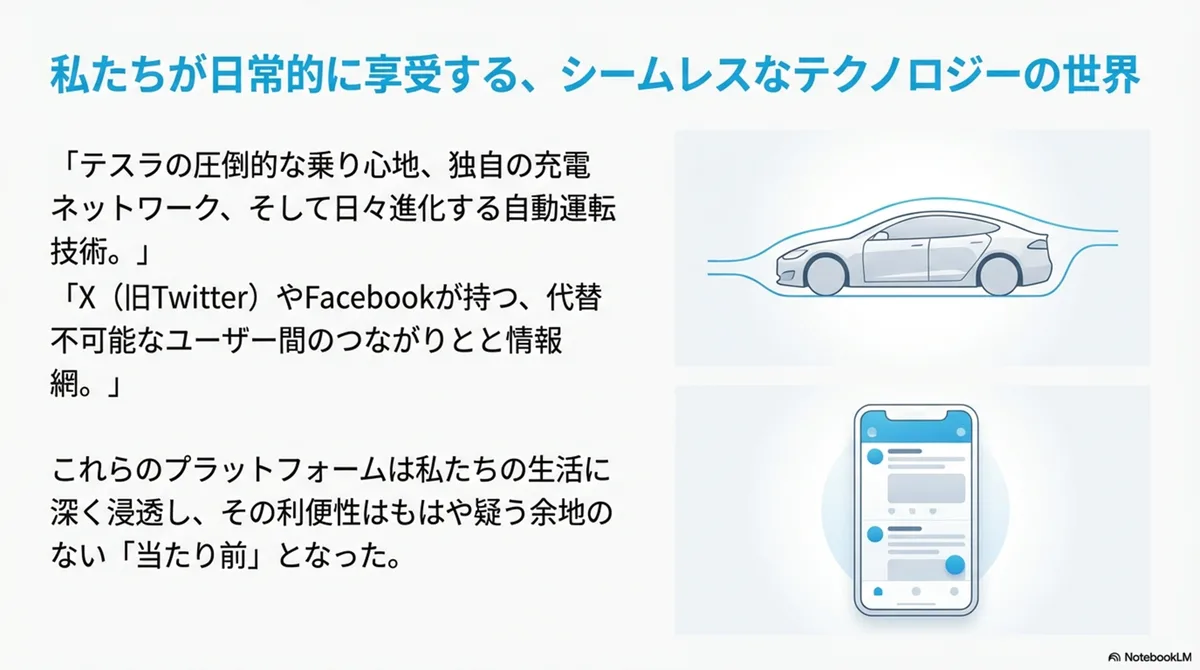
Social media platforms have the same problem. There are other platforms with functions similar to X and Facebook, but the large number of users already there and the connections among them cannot be replaced. Alternative social networks such as Bluesky and Mastodon drew attention for a while, but they have not overcome the wall of network effects.
The more these services are used, the harder it becomes for users to escape. For example, the more you drive, the more data accumulates, and the better self-driving performs. Social media, too, gains value as more people use it.
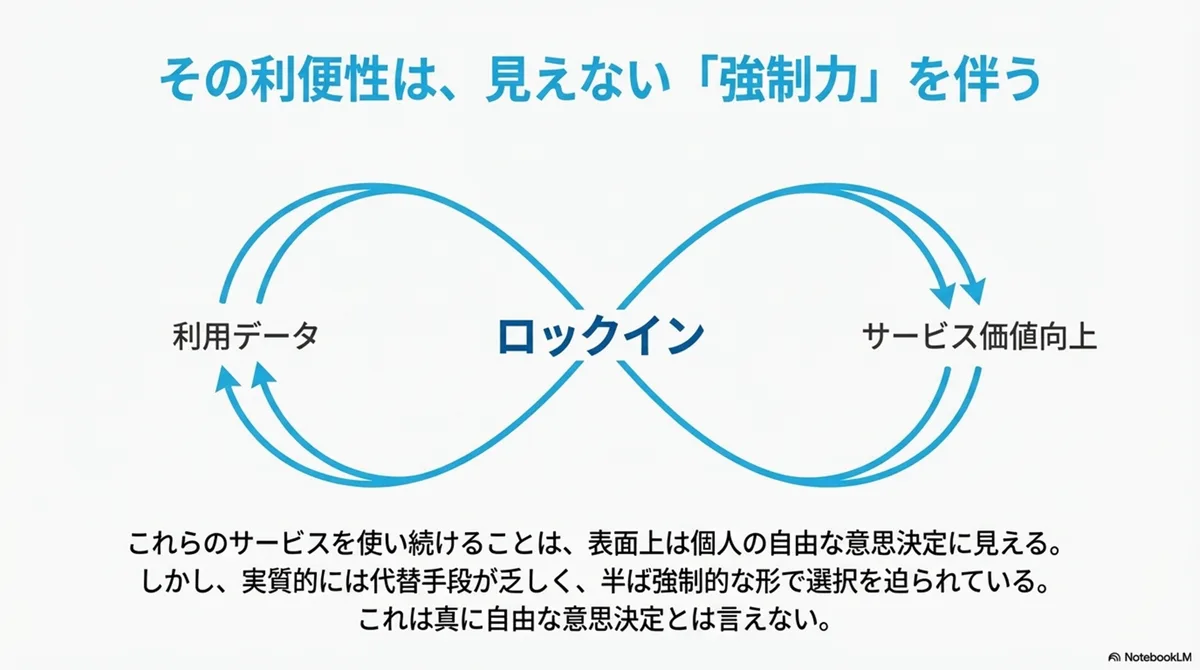
Continuing to use these services is, on the surface, our own decision. But we are being pressed to choose in a half-forced way, so it cannot be called a free decision.
It may be fine as long as it stays within what we can tolerate. But it is quite conceivable that it will stop being so, for example, that we will be put in a situation where we have to give up something important.
In such a moment, to avoid having to abandon our own will, we need to hold alternatives and enough power to influence others. To protect our freedom, or to protect what we want to protect, constant effort is needed to protect it, and we need weapons and armor sufficient to protect it.
With the need for such weapons and armor growing, I am writing this piece because I wonder whether startups, too, are coming to play a part in building them, and whether we are entering an era in which each company should think about such a role.
Changes in the Security Debate
It has been several years since we began hearing the word "security" frequently. At first it took the shape of authoritarian states such as China and Russia versus liberal democracies, but as of 2025, with a major turnaround by the United States, which had been taking the lead, that picture is changing significantly. As a result, moves have begun on security that avoids relying excessively on the great power that is the United States and looks ahead to a multipolar world (Economist).
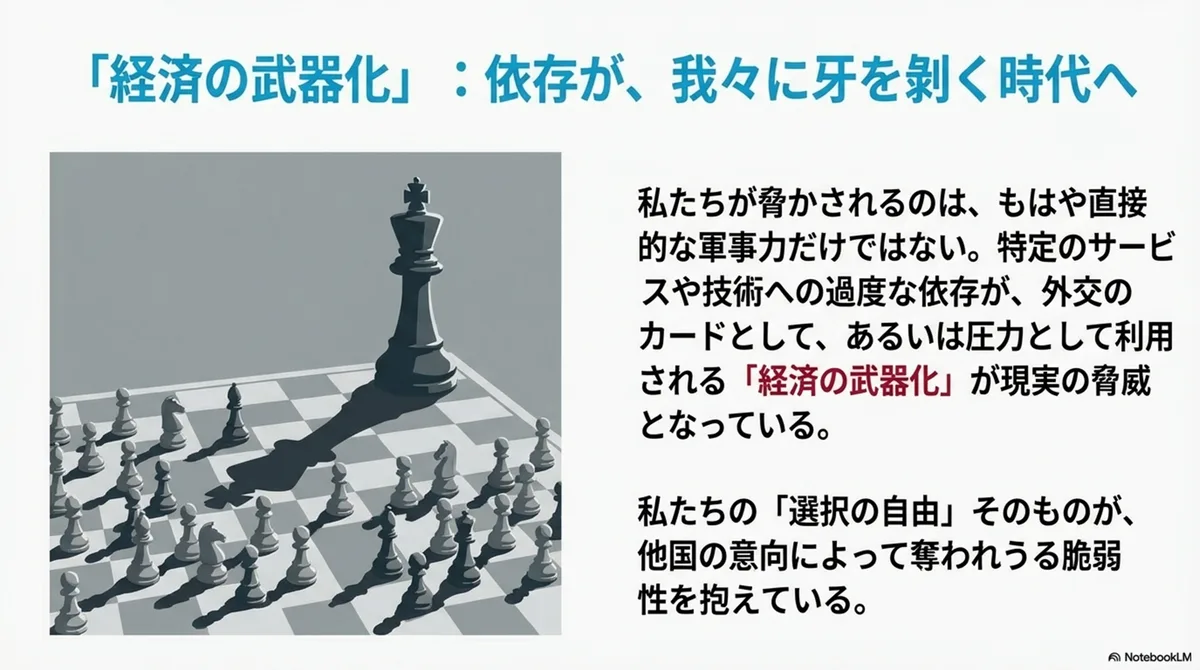
Similar discussions are starting in Japan as well. For example, if a military clash occurred near Japan and the United States said, "Hand over territory to China or Russia, or we will stop your self-driving cars," or "We will not provide GPS," then without alternatives we might have no choice but to accept those conditions. In fact, in Ukraine, the withdrawal of Starlink service came close to being used in exactly that way.
What threatens us is by no means only direct military force; we are also in an era in which the economy is being weaponized.
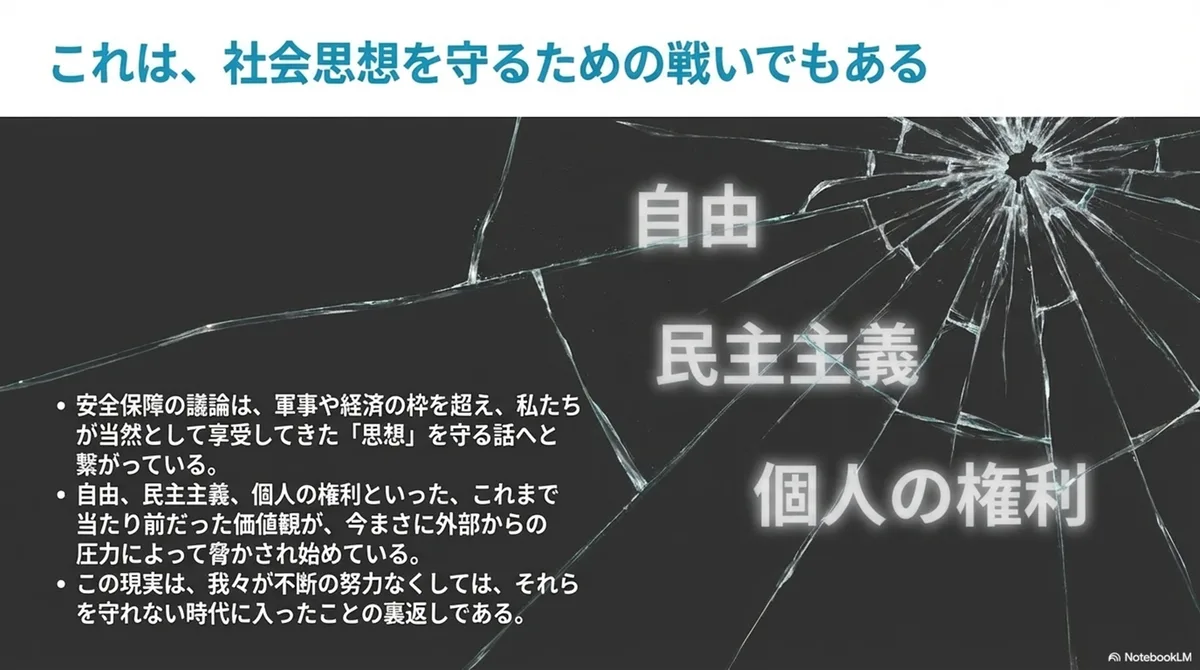
And I think the security debate is increasingly going beyond military and economic matters to connect with protecting social ideas.
Certainly, weapons are a means, and there must have been something we wanted to protect. One of those things is safety, and I believe the other is our ideas.
That we now have to be conscious of what we had taken for granted is probably the flip side of the fact that the freedoms, rights, and safety we had enjoyed as a matter of course are gradually beginning to be threatened.
The Role Only Startups Can Fulfill
As the international situation changes like this, I think the role of startups is changing too.
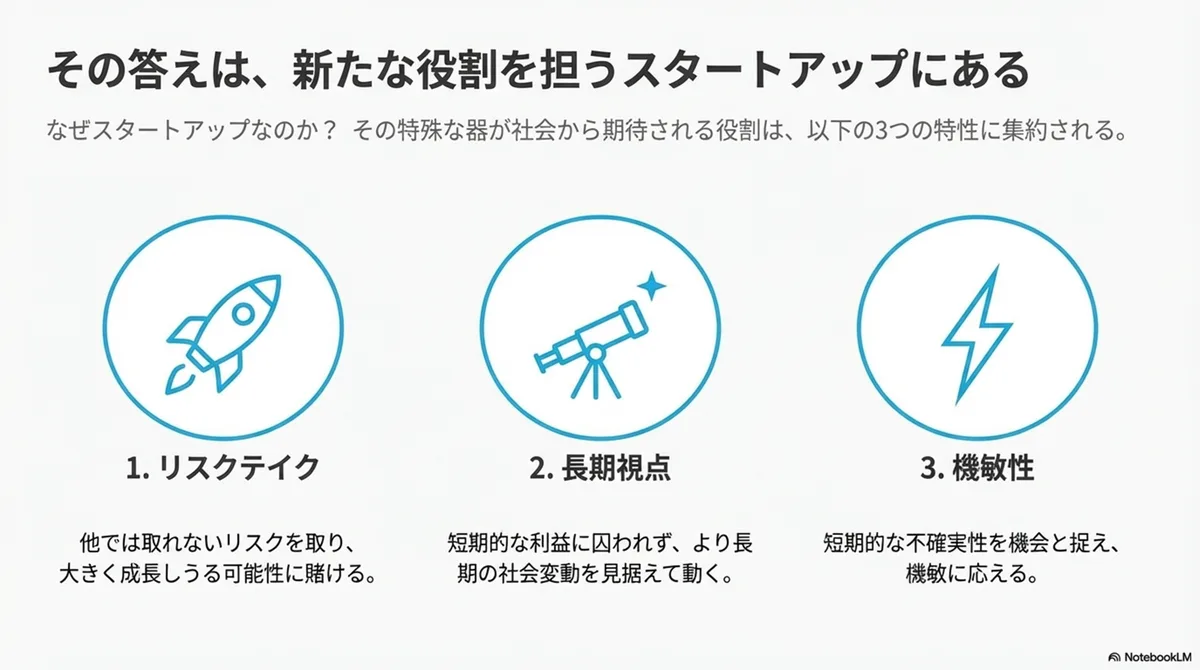
Among the various forms of business, I think the roles that society expects of the special vessel called the startup, and that it can fulfill for society, are one or more of the following three.
- Take risks that others cannot (bet on the possibility of growing big)
- Act with a longer-term view
- Respond nimbly to short-term uncertainty (and the opportunities it brings)
These characteristics can serve several roles even in today's social conditions.
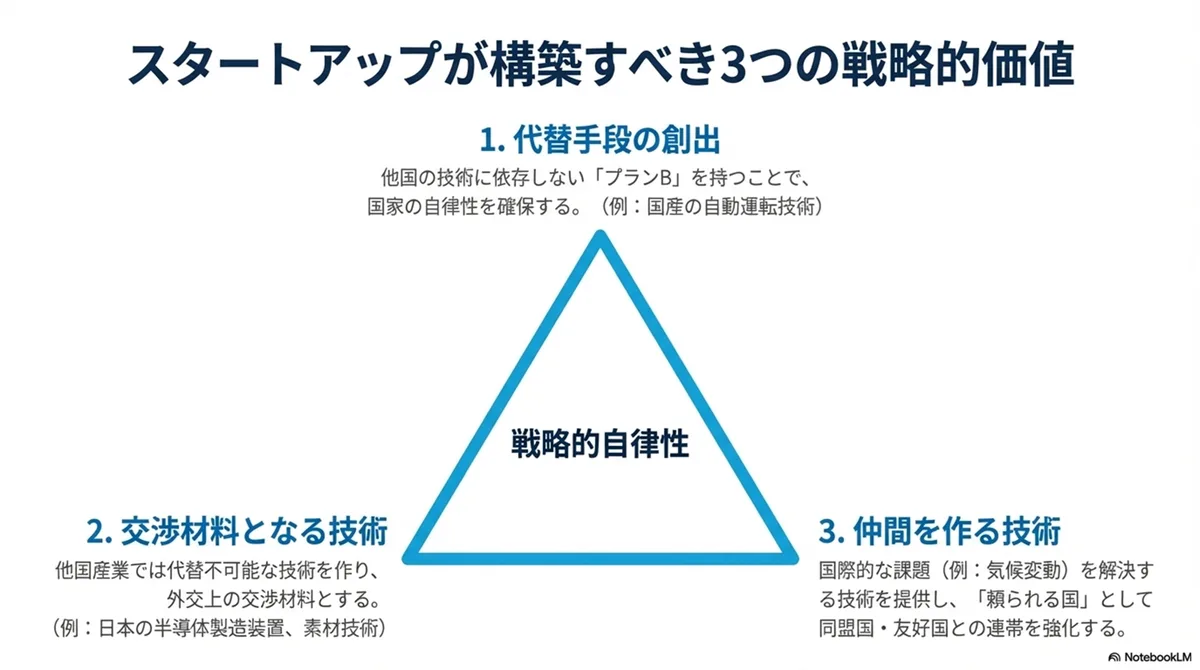
As a first example, if a Japanese startup could build self-driving technology, Japan would have a Plan B no matter how other countries act. Or if it could build a business or technology that industries in other countries cannot substitute, that might become a bargaining chip.
The second, long-term challenges, are similar. If a business that contributes greatly to the problem of climate change could be built, many countries would want it. And as for the third, if we can quickly provide what each era demands, we can respond to a variety of challenges.
In fact, Tesla and Starlink (SpaceX), which I have used as examples so far, can also be called startups.
If there are people who use the economy as a weapon, we too need to build a strong economy and advanced technology. Startups can play a part in that, and I think they are expected to fulfill part of that role in Japan (though they are a somewhat unstable vessel to make the core of a strategy).
For that, I think we need to build bigger, more meaningful businesses, and businesses that the future world will need.
An Open Society and Its Technology
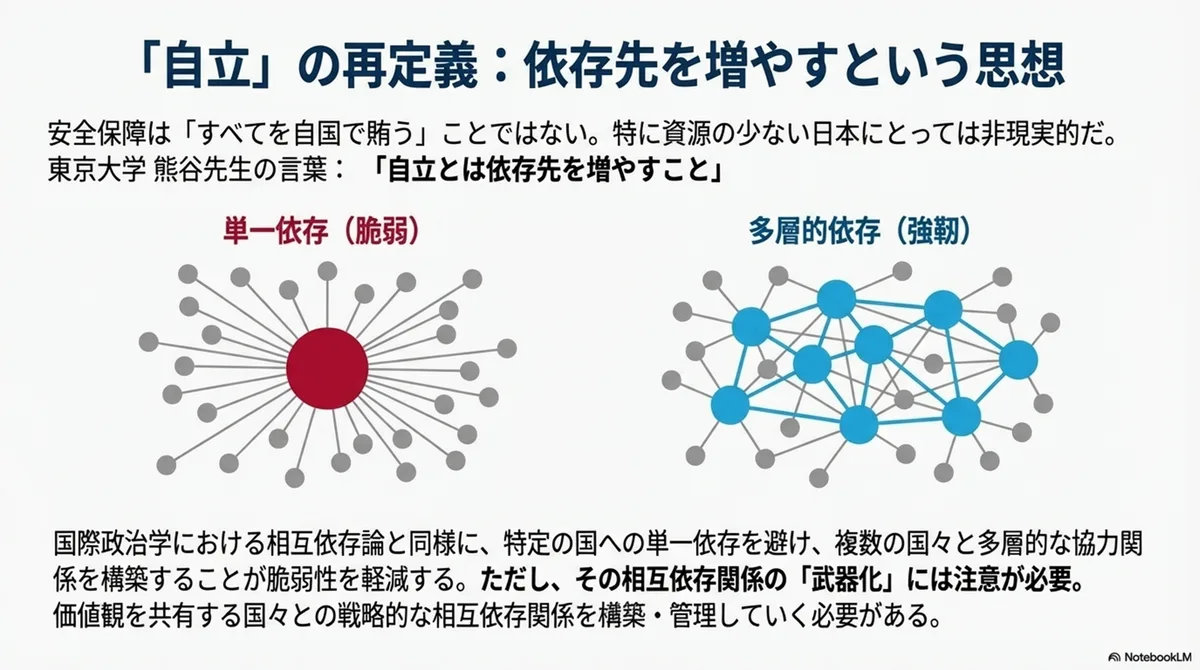
On the other hand, it is difficult for a single country to do everything, even a relatively large country like Japan. For Japan in particular, with few resources, it is not realistic to be self-sufficient in everything. Looking at energy and food alone, it would be hard to complete them within the country.
When we talk about security, the idea of "being self-sufficient in everything" tends to come first, but unlike great powers such as the United States, Japan probably has no choice but to live while cooperating with many countries and people.
In Japan, the words of Professor Kumagaya of The University of Tokyo, "independence means increasing the number of things you depend on," are well known, and in international politics too, Joseph Nye and Robert Keohane have argued that the formation of a complex network of interdependence reduces the vulnerability that comes from a single dependency.
(However, as Henry Farrell and Abraham Newman point out in the book on the weaponized economy mentioned above, such interdependence is itself being weaponized. In fact, the countries that are most easily damaged by recent tariffs and the like are allies and friendly countries with high interdependence, because the economies of other countries have already been separated from ours.)
As the example of the United States makes clear, when an ally's policy changes through its domestic politics, its ideas change too. Considering that a change of government could greatly alter each country's policies, we need to build and manage multilayered cooperative relationships and strategic interdependence with multiple countries that share national interests and values, rather than depending on one particular country.
To build such relationships, we also need to be appropriately open. That means sharing resources, information, data, and so on while working with allies who share, to some extent, similar ideas and awareness of problems. And we will probably also need an appropriate distance, cooperating with countries holding different ideas in the areas where cooperation is possible.
To carry this out, technologies and businesses that protect our own country while contributing to others are indispensable.
Making Allies Through Technology and Business
The technologies and businesses I mean here are not ones that attack other countries, nor ones for defending militarily, but rather private economic activity (defensive technologies and businesses would need a separate discussion).
In the economic context, for a resource-poor Japan, the cards that can serve as bargaining chips in the international community are science and technology, the financial assets accumulated so far, and culture such as content. Soft power such as Japanese anime and Japanese food is already recognized worldwide, but in advanced technology as well, Japan still has the potential to create the same kind of value.
By developing technologies that work globally and contributing to solving international problems, Japan can become a "country that others rely on." In fact, the advanced technologies held by Japanese semiconductor equipment makers and materials companies provide value that is hard to replace in the global supply chain.
Such exportable technologies are also technologies that connect to solving national and global problems, and if they succeed, they should bring economic returns as well.
For example, having excellent climate change technologies would not only give us material for international negotiations but also strengthen solidarity with countries that see climate change as a problem. Or, now that the United States has stepped back from the position of ideological leader, Japan could take the leading position.
(In that sense, I hope that the inclusion of security in the Seventh Science, Technology and Innovation Basic Plan will be a discussion that integrates industrial policy, science and technology policy, and security with an eye to solidarity with countries around the world.)
And in this context, I think startups should be more conscious of contributing to their own and other countries by using the strengths of their vessel to build technologies that protect their country's autonomy and businesses that enable solidarity with other countries.
In other words, I think we are in an era in which startups need to think harder about "what does this business mean from the standpoint of the nation and international relations?" and "what businesses do our own and other countries want?", and I also feel that among the startups around me, such discussions are gradually increasing.
Japan's Position in the Liberal International Order
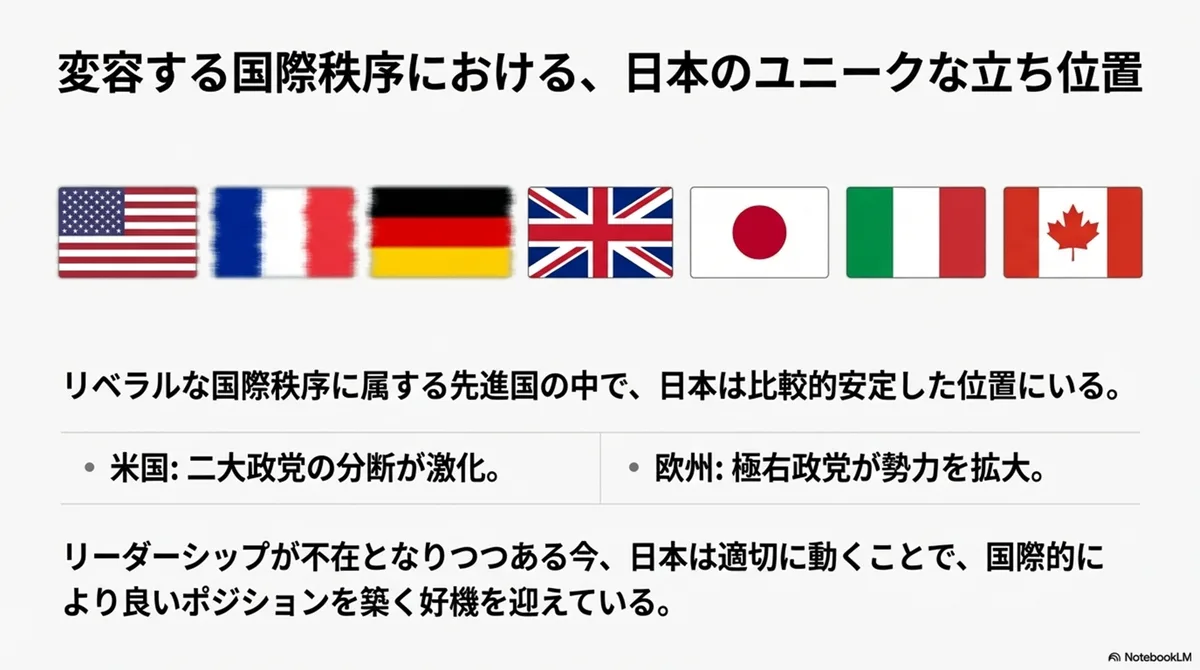
Among the advanced countries that belong to the liberal international order, Japan is still in a relatively stable position. In the United States, the divide between the two major parties is severe, and in Europe, although democratic values are maintained, far-right parties are gaining strength in several countries.
Japan, by contrast, fortunately has not seen much change, for better or worse. The Liberal Democratic Party (LDP), which carries "liberal democratic" in its very name, is still the ruling party, and the second-largest party, the Constitutional Democratic Party, also takes a liberal position.
It seems the LDP was on the verge of becoming the "Japan Conservative Party" at its founding, but even so, at its establishment it stated that it "bases its diplomacy on cooperation and partnership with free and democratic countries," and its current platform clearly states "under proper liberalism and democracy."
Within the ever-changing liberal international order, leadership is currently becoming absent. That may be for a short period, but even so, I think Japan is in a position where, by acting appropriately, it can more easily secure a better position internationally.
More Startups That Serve the National Interest, and Competition
To make that happen, however, we need businesses that can serve as live ammunition.
I think startups could fulfill that role when it comes to building such businesses in a short time. However difficult it may be, they take risks to go and build self-driving cars or LLMs, or to build climate change technologies.
Unless startups become a vessel that actively takes on such responsibility, they will remain a side stream of the economy forever.
And if startups are meant to react nimbly to "the times," then Japan right now faces many "challenges unique to this era," both abroad and at home, and there is a great deal to tackle.
At home, labor shortages and the like come to mind. If we overwhelmingly resolve that shortage, we can work on more innovative work.
Abroad, what we should do is emerging: maintaining the societies and freedoms founded on the ideas we want to cherish (for example, liberal democracy), and keeping nations and their people autonomous.
I think some startups must take on those challenges.
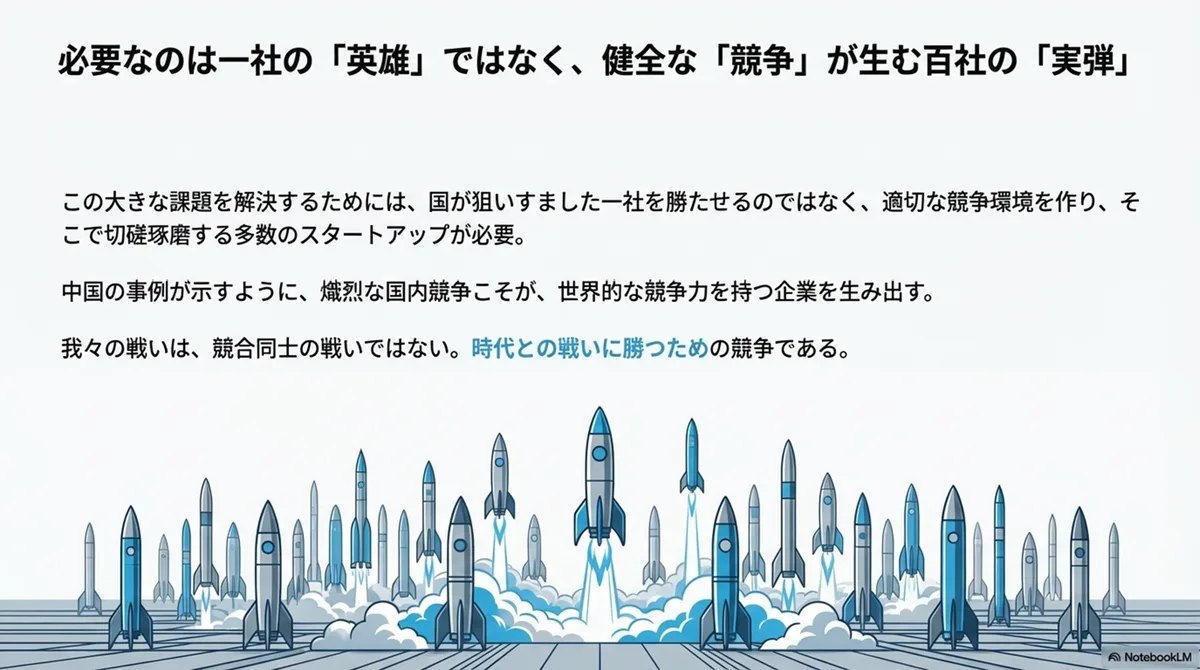
And I think this must never become a situation where there is only one company in Japan in each field.
A government cannot support just one company (although aid to large corporations does look like it effectively supports a single company). Moreover, even in China, it is because of competition in the domestic market that companies with global competitiveness have emerged.
Rather than having the government pick one company and make it win, creating an appropriate competitive environment and prompting companies to spur each other on there is what will produce startups that truly win in the world.
And that should be not only to win battles among competitors but also to win the battle against the times.
Startups for Freedom and Solidarity
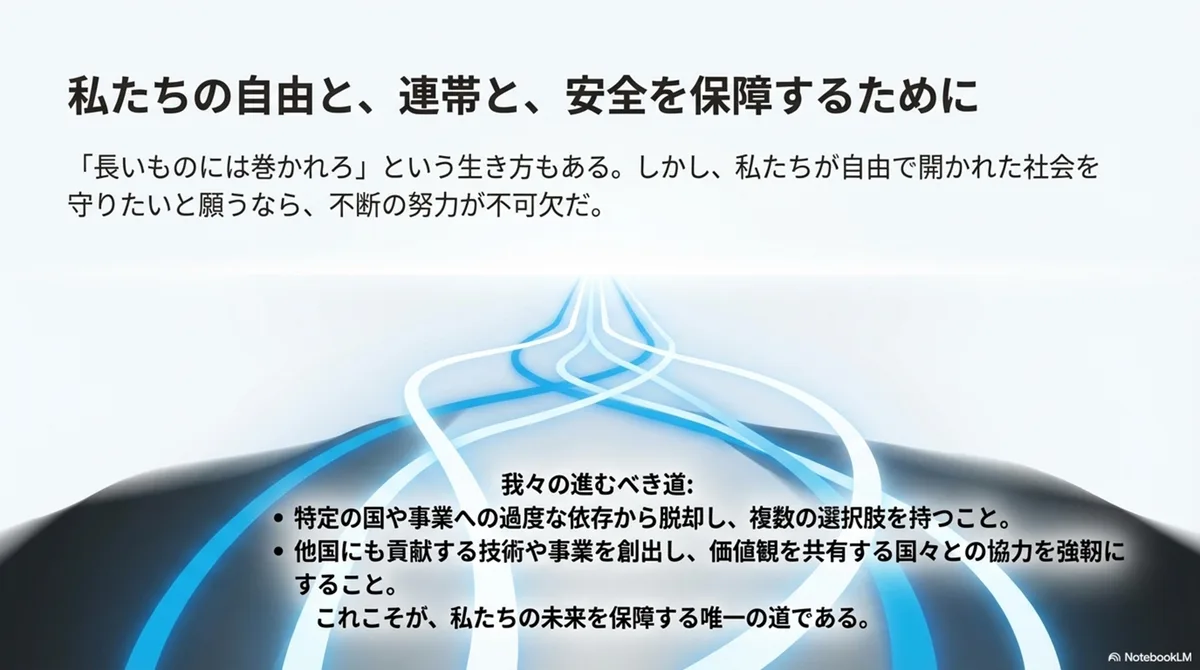
As the saying "bow to the powerful" goes, some people think it is wiser to submit to the strong. Others, I imagine, take the position that "it is foolish to defy the strong."
But if you take a different position, and in this article's terms, if you want to protect a free and open society, effort is required.
Breaking away from excessive dependence on particular countries or businesses, having multiple options, and contributing to other countries as well are what guarantee our freedom, solidarity, and security.
For that, it is important to develop technologies that work globally and strengthen cooperative relationships with countries that share values and national interests, and I personally hope that Japanese startups can contribute to this, and that more of them will go after that role.
That would also mean taking on the role of creating technologies and businesses that carry not merely economic value but social and political value, and keeping an eye on businesses of greater significance.
Climate change countermeasures were one of the problems of our generation. In addition, I believe that maintaining liberal democracy and defending the liberal international order are also problems our generation must take on.
Plenty of analysis of the current situation has already been done, and we are now entering the stage of execution. I hope that many startups will emerge to take on challenges as pioneers of that execution, and I would like to do whatever I can to help make that happen.