DX and EX
This article was machine-translated from Japanese by AI (Claude). It may contain errors. Read the original Japanese article.
We hear the term DX (digital transformation) more and more often. With people saying that "every company will become a digital company," it seems that every company is working to bring digital technology into its business.
On the other hand, humanity 100 years ago was in a similar situation, having to adopt a new technology. That technology was electricity. Today, it sounds very strange to say that "every company will become an electricity company," but 100 years ago, people were working hard on the shift from steam engines to electric power. So how did our predecessors achieve their EX: electric transformation? Looking back at this briefly may offer some implications for today's DX.
An interesting account of this is Tim Harford's article. Describing the gradual adoption of electricity during the Second Industrial Revolution, the article explains that a technology cannot show its full performance unless industry is optimized for it. This post leans mainly on his argument as it looks back at how EX unfolded.
From science to industry
The First Industrial Revolution is said to have occurred from the late 1700s to the early 1800s, following the appearance of the steam engine. About 100 years later, the Second Industrial Revolution took place from the late 1800s to the early 1900s, driven by advances in chemistry, petroleum, steel, and electricity. Let's focus on electricity and see how it came to be adopted.
Scientific progress on electricity came before its industrial application. For example, Ohm's law was discovered in 1827, Faraday discovered electromagnetic induction in 1831, and Maxwell published his treatise on electricity and magnetism in 1873. (From Wikipedia)
Industry began to use electricity after that.
In 1881, Edison built an electricity generating plant, and about a year later he began supplying electricity, and sales of electric motors to run factories began.
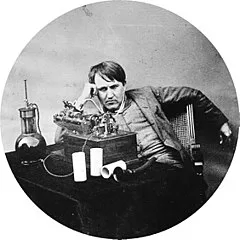
https://ja.m.wikipedia.org/wiki/%E3%83%95%E3%82%A1%E3%82%A4%E3%83%AB:Thomas_Edison,_1888.jpg

Yet by 1900, it is said, fewer than 5% of American factories were powered by electric motors.
It seems that even 140 years ago, people could not make good use of electricity in industry for some time after it appeared. Why was that?
Factories before electrification
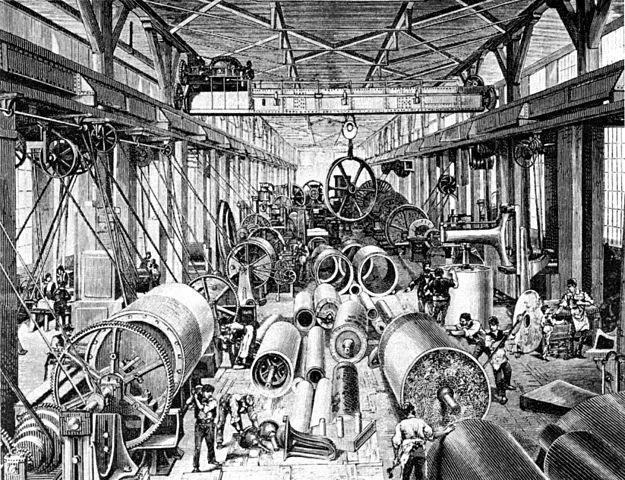
United States public domain / https://commons.wikimedia.org/wiki/File:Bild_Maschinenhalle_Escher_Wyss_1875.jpg

Until electricity became commonplace, factories ran on steam engines. In a steam-powered factory, a single steam engine was the source of power. The power generated by the engine was transmitted through belts and gears to every machine, such as hammers, punches, and presses. Using belts and gears inevitably causes power loss. The farther you try to carry the power, the greater the loss, and as a result, you could not make the factory large.
Factories were also extremely dangerous. For example, workers could be caught in the belts and dragged in, a constant risk. Moreover, to keep fire from spreading through gaps, belt towers enclosed all of it, and the belts had to be oiled as well.
Maintenance was hard too. A steam engine almost never stopped, and coal had to be supplied constantly.
There was also the problem of location. Steam-powered factories were dark, with everything arranged around the shafts. And because the engine was so huge, it was sometimes moved out of the factory and the steam engine installed in a second building.
How electricity changed factories
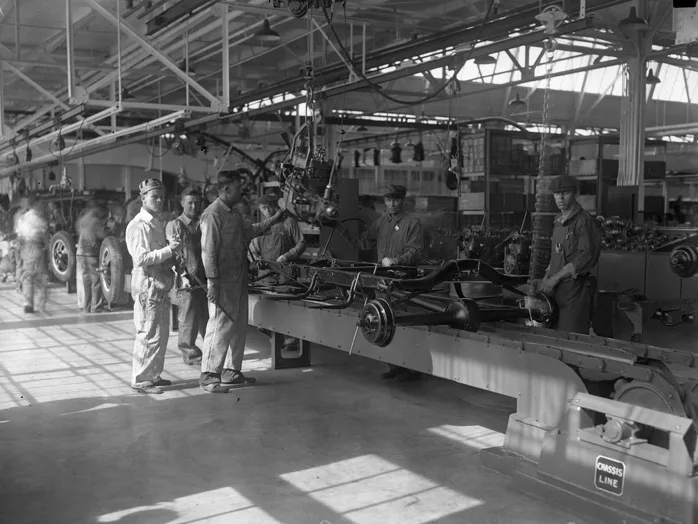

So what about a factory run on electricity?
In terms of power, an electric motor can be seen as a substitute for a steam engine. It was possible to simply replace a steam engine with an electric motor. On the other hand, early electric motors seem to have been unstable, with problems of materials and technology to be solved, so I would guess that in terms of power alone they were little more than an inferior version of the steam engine.
But electric motors had many more advantages.
For example, small steam engines are very inefficient, whereas small electric motors run many times more efficiently. It therefore became effective to install multiple small electric motors in a factory. For instance, by placing an electric motor at every workbench, there was no longer any need to transmit power by belts from a central point, as with a steam engine. As a result, it became possible to design factory layouts completely different from those of steam engines, which were centered on a conventional drive shaft. Henry Ford himself said, "This made it possible to arrange machines in the order of the work, and it doubled the efficiency of industry."
Furthermore, a steam engine had to be running all the time, but electricity does not need to be kept running constantly the way a steam engine does. And because coal and the like were no longer needed, the workers there could work in a cleaner environment. They were no longer caught in belts, so it also became safer. With electricity available, electric lights could be installed, factories became bright, and they could operate at all hours.
In the 1920s, Westinghouse's central power station appeared, and electricity could be supplied reliably. As these changes accumulated, electricity became a platform, and factories began to run as applications on top of it; it is said that factory productivity then improved dramatically in the 1920s.
In other words, to fully exploit the potential of the new technology of electricity, it seems that merely replacing some of the work done by steam engines with electricity was not enough. To use the power of electricity, the design of the factory itself had to change. And factories built to a completely different design made possible a business model unlike any before (mass production).
In the case of the Second Industrial Revolution, it took about 50 years to get there.
Society

This is not simply a matter of technology. Unless society changes at the same time, the potential of the technology cannot be realized.
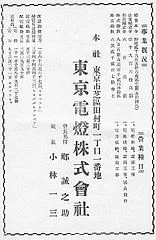
Let's look at the case of Japan. Tokyo Electric Light Company, the predecessor of Tokyo Electric Power Company and Japan's first electric power company, was founded in 1883. It is said to have begun operations in 1886 and started transmitting power in 1887.
In 1891, the temporary Diet building burned down, apparently because of an electrical leak. This led to recognition of the need for safety management in the electric power business, and the Ministry of Communications took on supervisory responsibility. Then in 1911 the so-called old Electric Utilities Act was enacted. In 1965 the new Electric Utilities Act came into force. In other words, laws too were established gradually.
Let's look at education as well. Electrical engineering was first offered as a degree in Japan in 1886. Until then, electricity had been taught as part of physics. The qualification of chief electrical engineer came into being in 1896. At that time, however, there was no examination, and scholars and experts were selected. Then, together with the old Electric Utilities Act in 1911, an examination system was introduced for the qualification, and even people without academic credentials could become electrical engineers.
After that, in the 1930s, under the influence of war, Tokyo Electric Light Company became a national policy company.
Even electricity, a technology so commonplace today, was only able to show its true value after decades like this. Technological progress and optimization were part of it, but it also took time for society and education to change in step with the technology.
Implications
Here are the things about past EXs that I personally found interesting.
- Unless you change the overall design of the factory, you cannot make use of the technology
- Even a platform like electric power began with a killer application (electric lighting)
- As it becomes infrastructure, it is nationalized (early steam railways also began as private companies)
From this, I personally think the following about DX.
- DX is not merely making some operations more efficient; it is changing industrial structures, business processes, and business models around information technology
- When information technology becomes infrastructure, nationalization is also an option (this comes up in the GAFAM debate too)
For example, if subscriptions and usage-based pricing in manufacturing are business models made possible by the development of information technology that lets you grasp in real time how much users have used, and if those are the optimal business models for the digital age (this is an assumption), then perhaps digital transformation is the transformation of a business into one that fits such business models.
I talked about this kind of reshuffling of industries on a podcast not long ago.
FoundX Podcast #02「次の Tesla」 - 髙橋卓巳さん - FoundX Review - 起業家とスタートアップのためのノウハウ情報review.foundx.jp
Considering this with reference to Carlota Perez's S-curve and the like, the current flourishing of the information industry, called the Fourth Industrial Revolution or Society 5.0, looks like it has only just begun. News that various countries have introduced new technologies often stirs up the world, but it is best not to assume that introducing a single technology will create a big gap. Rather, finding the most efficient new forms of industry and society built around information technology over the next decade or more will probably determine whether DX succeeds.