AI, Employment, Elite Overproduction, and How Education Will Change
This article was machine-translated from Japanese by AI (Claude). It may contain errors. Read the original Japanese article.
AI performance has advanced greatly over the past year. Along with it, I have been thinking more about the future of education and employment.
What I am thinking about in particular is what changes society and universities are likely to see when AI reshapes employment.
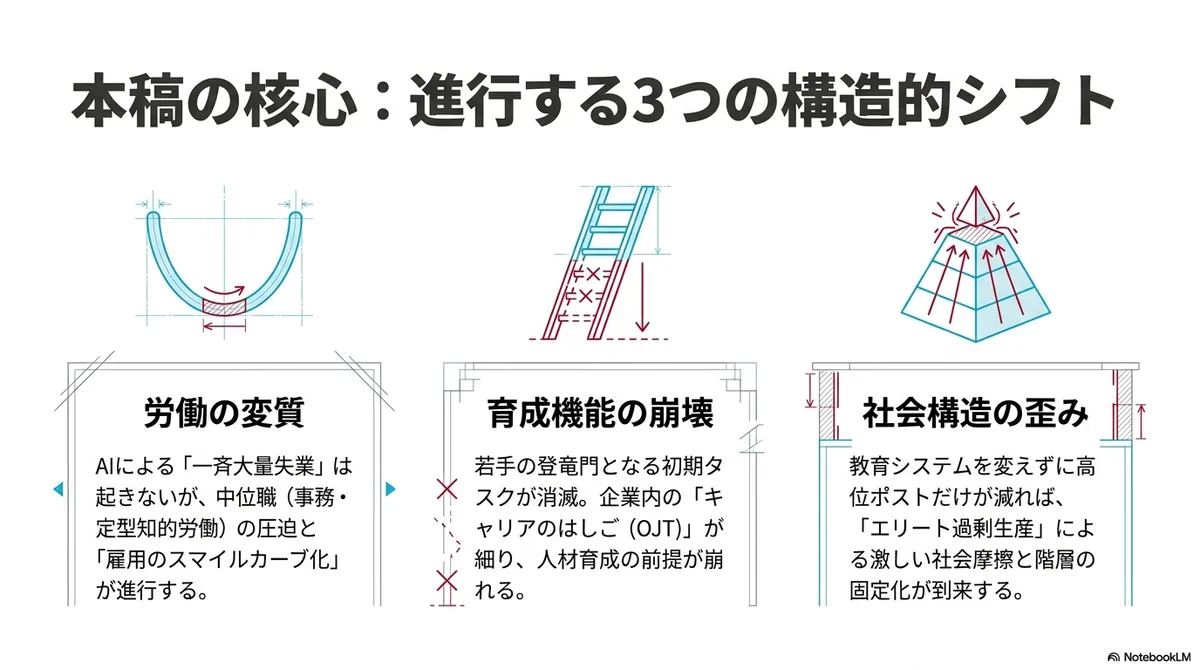
In this article, there are three broad areas that I think will "change."
- AI will change employment and the nature of work itself
- The way people advance in their careers will change
- Elites will become even more overproduced
Building on these, I have written down what to do about university education, though it is still at a rough stage.
Jobs may not be "taken away," but…
The common topic is AI-driven unemployment, but looking at recent reports on AI and labor, many say that at present, it is hard to claim that "AI is causing mass unemployment."
In McKinsey Global Institute's 2026 report on Europe, 58% of current working hours across ten European countries are said to be technically automatable with existing technology. However, it is important to note that this does not mean "58% of jobs will disappear"; it refers to technical automation potential.
Goldman Sachs also states that "the rise in unemployment during the transition would be about 0.5 percentage points," that "2.5% of US employment is at risk if current use cases expand," and that "6–7% could be displaced if adoption is widespread," but it concludes that it is "skeptical of large-scale job cuts."
Looking at the analyses by the Yale Budget Lab and the New York Fed, neither broad labor market disruption nor a clear decline in job postings due to AI has yet been clearly confirmed.
Andreessen Horowitz and others, rather, argue that the AI job apocalypse is a complete fantasy. Their argument is that AI compresses some tasks and roles, but that productivity gains also create new demand and new jobs.
Even so, many people probably feel that parts of their work are being automated by AI, and many organizations have stopped hiring interns.
To explore the cause, looking only at "whether jobs will disappear" is probably insufficient. We likely need to break work down into finer parts and look at where the impact lies.
For example, it seems better to organize things by level of abstraction, such as tasks, hiring, and macro employment numbers, and to understand that the current impact and the time frame over which the impact spreads differ for each.
Layer | What changes | Current degree of impact |
Tasks | Summarizing, drafting, searching, classifying, routine analysis, and first-line responses become AI-driven | High |
Hiring | Recruitment and job design for young, entry-level, and junior positions change | Moderate, but important |
Employment numbers | Reductions in existing staff, disappearance of occupations, rising unemployment | Limited at present |
In the short term, rather than mass unemployment caused by AI, we should probably expect that tasks in white-collar work, especially in highly exposed occupations, will be replaced, and that in the medium to long term, changes in hiring requirements and effects on employment and wages may follow.
However, some are beginning to argue that effects on employment are already appearing in certain areas.
In the Economist's article of May 13, it is reported that in the "most exposed fields," employment numbers are already affected. In the US, on top of a job market that has worsened macroeconomically, AI's effects already seem to be appearing in the short term as well, which matches my own sense. The following is a quotation.
We found that graduates in fields more exposed to AI are doing markedly worse. From 2022 to 2024, in the bottom 20% of fields least affected by AI (such as education, philosophy, and civil engineering), the full-time employment rate fell by only 1.5 percentage points. In contrast, in the top 20% of fields most exposed (such as computer science, computer engineering, and information science), it fell by as much as 6.6 points. (Translated from a passage in Is AI putting graduates out of work already?)
The article arguing that the AI job apocalypse is a complete fantasy, by Andreessen Horowitz, has a point, but it also looks too optimistic to me. The issue is not total employment but who loses jobs and who gains them, how many years the transition takes, and what "quality" the newly created jobs have.
Changes in work
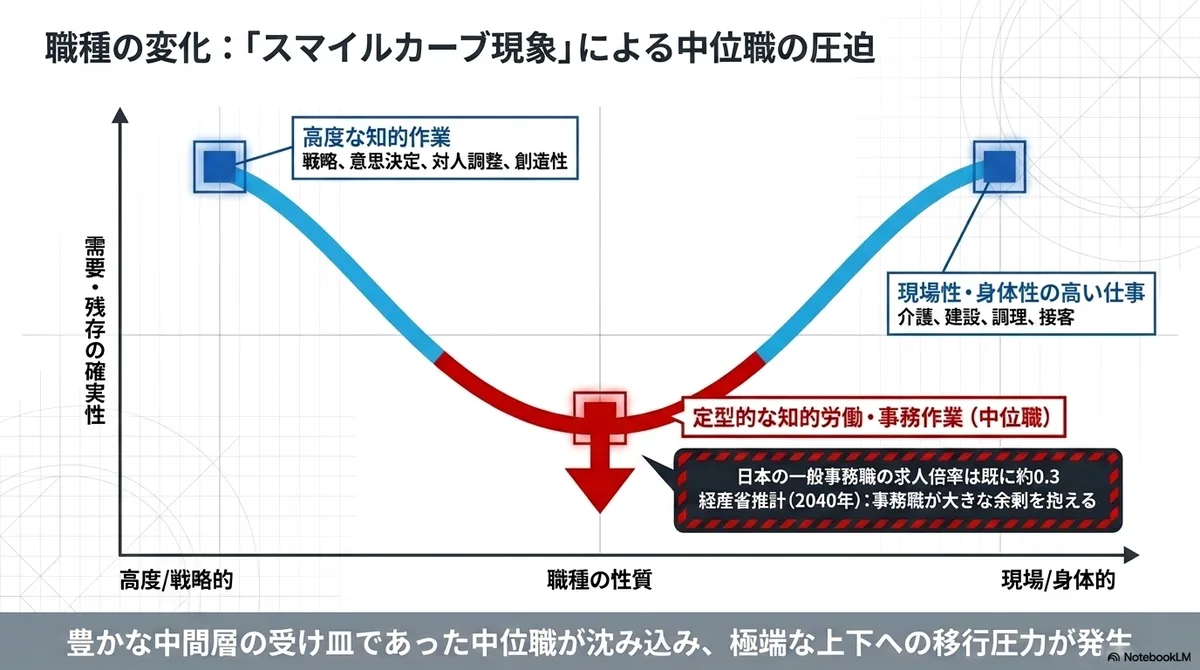
If effects on employment and wages do arise in the medium to long term, it is often said that they will land on middle-tier jobs. It is a phenomenon like the "smile curve" often mentioned in connection with AI.
The view is that advanced intellectual work, such as strategy, decision-making, accountability, interpersonal coordination, and highly creative work, will remain, and that jobs that are strongly physical and on-site, such as caregiving, construction, maintenance, cooking, and parts of customer service, will also remain, but that routine intellectual labor and clerical work in between will be squeezed.
For general clerical work, a typical middle-tier job, the job openings-to-applicants ratio in Japan is already low at around 0.3, and such occupations will become even easier to replace going forward.
In fact, in the occupational mismatch section of the Ministry of Economy, Trade and Industry's Estimates of the 2040 Employment Structure (Revised Edition), updated in March 2026, clerical occupations are expected to have a large surplus.
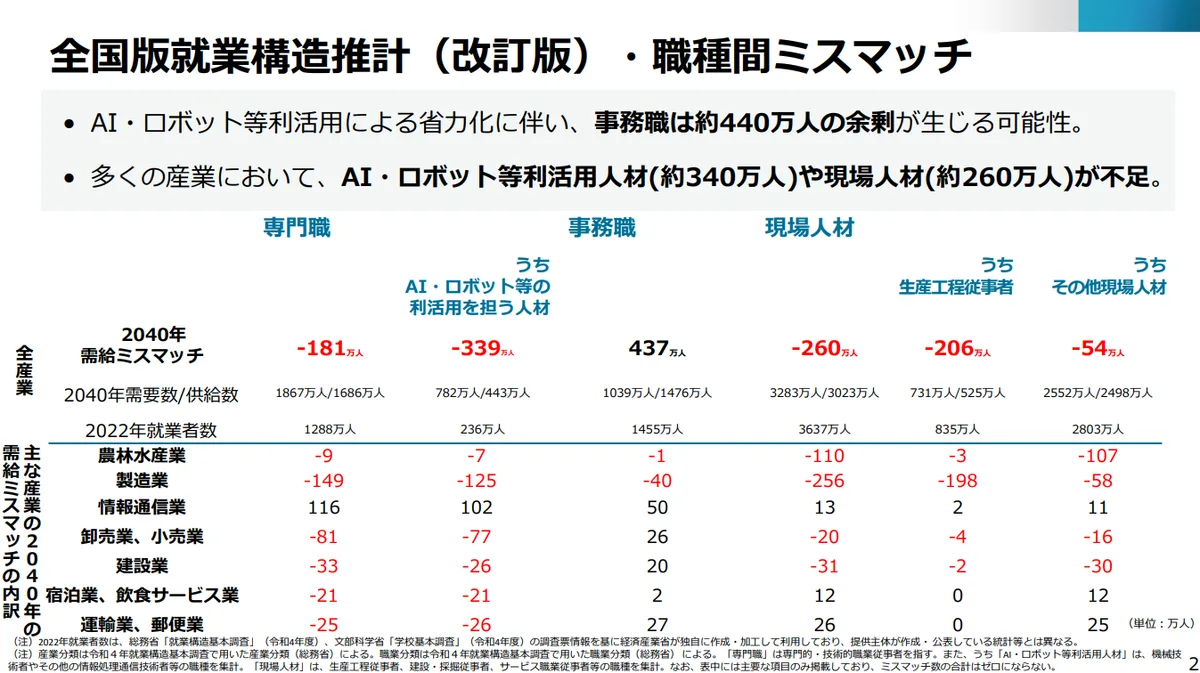
https://www.meti.go.jp/shingikai/sankoshin/shin_kijiku/pdf/030_s02_00.pdf
As a result, workers will come under pressure to either
- strive to move up to higher-tier jobs, or
- move to lower-tier jobs (though I do not like using that term…).
If lower-tier jobs pay sufficiently and are rewarding, humane work, they could be called AI-assisted work. If not, they become AI-supervised work, in which people are made to work relentlessly and efficiently, as if under a harsh boss. (Like some of today's gig-work platformers.)
Also, middle-tier jobs currently provide many positions with decent wages and serve as a safety net. If this collapses, social instability will increase through a widening gap between rich and poor and other effects.
Concentration of impact
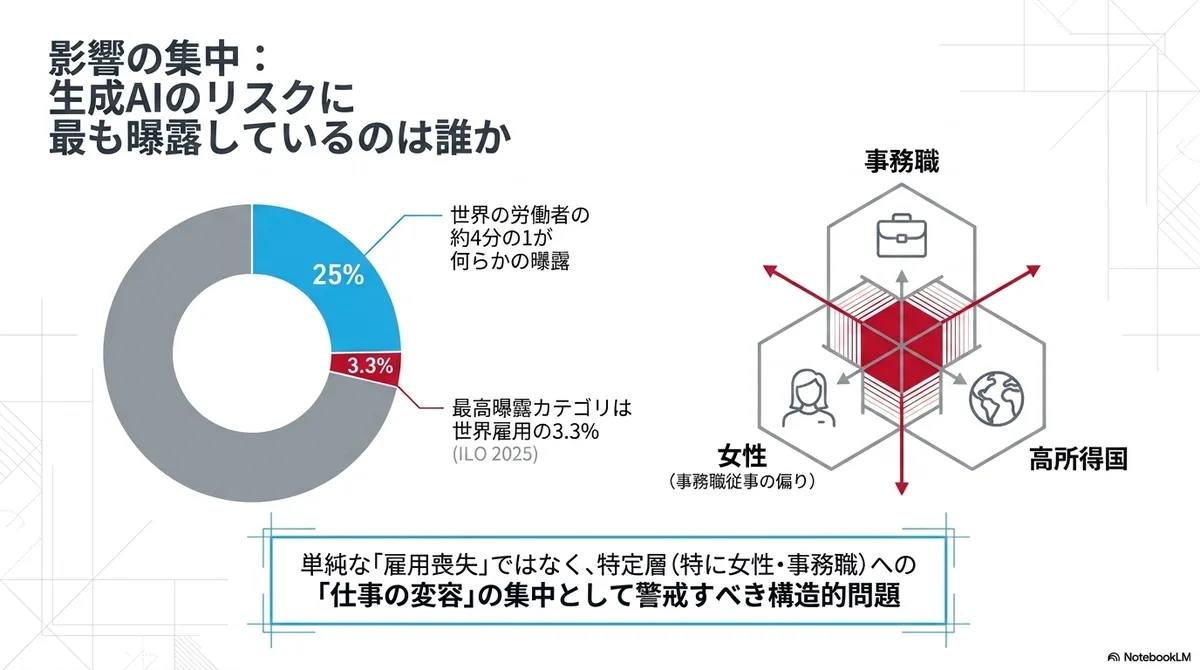
Furthermore, just as the China shock in manufacturing (the decline of manufacturing in advanced economies due to expanded trade with China) hit certain regions especially hard, AI too looks likely to be quite uneven across regions and occupations.
The Economist article mentioned earlier pointed out that fields such as education were unaffected, while the top 20% of most exposed fields (such as computer science, computer engineering, and information science) saw a drop of as much as 6.6 points. And according to the International Labour Organization (ILO)'s 2025 report, about one quarter of the world's workers have some exposure to generative AI, and the highest-exposure category accounts for 3.3% of global employment, but exposure is said to be especially large in
- clerical occupations,
- high-income countries, and
- women (who often hold such jobs in particular).
The ILO views this not as simple "job loss" but as "job transformation."
That the impact is skewed toward certain occupations and a certain gender means that AI's impact is also a gender issue. In Japan, too, clerical work is a major source of employment for women, and if AI-driven labor saving advances, the entry points to jobs held mostly by women may narrow first. This could also have a major effect on the income and lives of dual-income families in the Tokyo metropolitan area and of single-mother households.
Changes in the "career ladder"
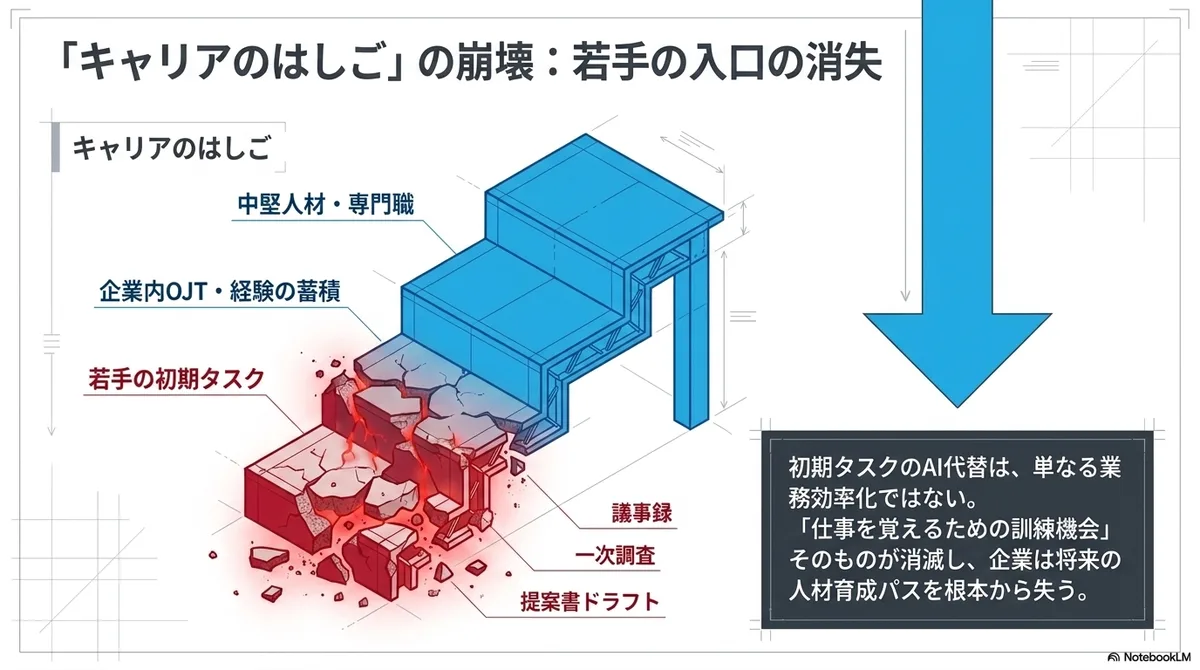
Beyond that, it can be said that even within the same job, the "entry point to the work" is changing.
What AI can easily replace is the work that young workers are given first. Taking minutes, doing research, and drafting proposals and contracts may seem like simple tasks, but in practice they were also training through which young workers learned the job.
By cutting such work, AI will let companies become more efficient. At the same time, however, the experience through which young workers learn the job will also be cut. In other words, training opportunities within companies may decrease, and the function of developing future mid-level talent may weaken.
In fact, Anthropic does not say that unemployment has clearly risen in highly exposed occupations, but it indicates that, among young people aged 22 to 25, hiring into highly exposed occupations may be slowing. Research by the Stanford Digital Economy Lab likewise reports that employment of early-career workers aged 22 to 25 in highly AI-exposed occupations has declined in relative terms.
What matters here is not only that "jobs for young people are decreasing" but that the career ladder for developing future mid-level and specialist workers is narrowing. This also means that even if someone wins the fierce competition to enter, advancing afterward becomes difficult. I once introduced a similar "collapse of the career ladder in manufacturing" that occurred with industrial robots, citing a Brookings paper, and the same is probably true whether the automation comes from industrial robots or from AI.
https://www.youtube.com/watch?v=A7hgeUXhxBk
Changes in education
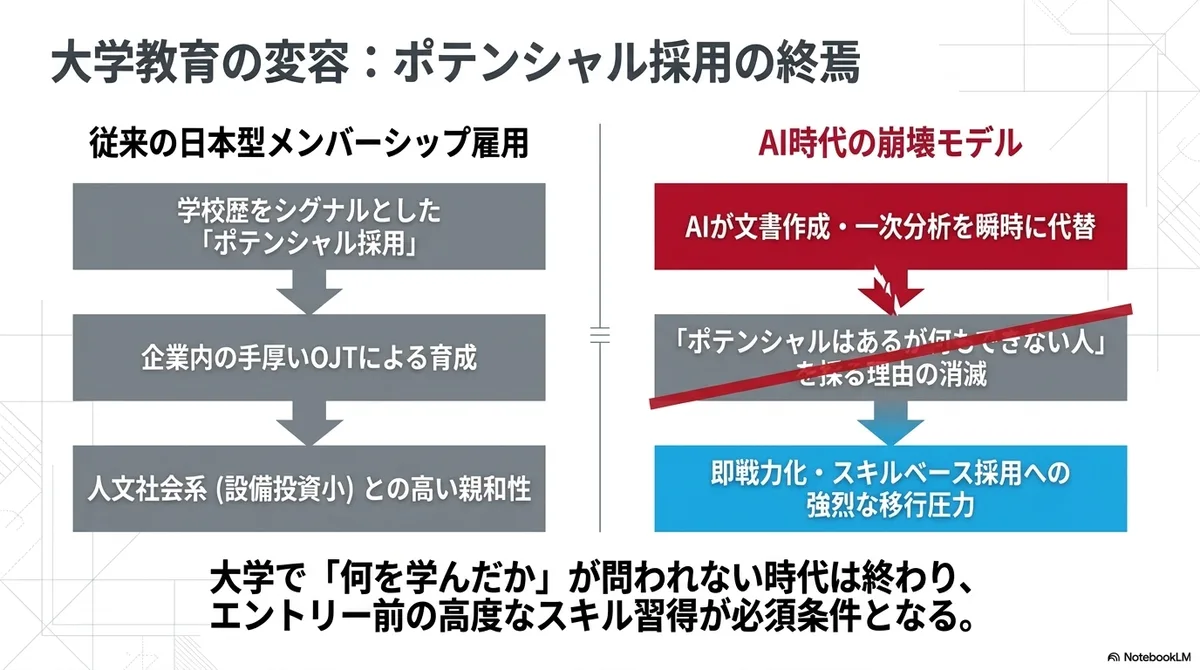
These changes in employment will also greatly affect education.
Japanese companies have so far hired students for their potential, practiced membership-type employment, and trained them after they joined.
Behind this lay the premise that which university one entered counted for more than what one learned there, that is, academic pedigree. This also led to tolerance for the large number of humanities and social sciences programs at Japanese private universities. This is because the humanities and social sciences require relatively little capital investment, and they suited the expansion of private universities. Looking at hiring as well, companies' evaluations leaned too heavily on diplomas and academic pedigree, and if membership-type hiring was practiced and people grew through on-the-job training at the company, there was not much need to reflect what had been learned in school in vocational ability.
However, once AI can handle document drafting, research, summarizing, clerical processing, and first-pass analysis, the reasons to hire "people who have potential but cannot do anything yet" become relatively weaker. Employment of young university graduates would then gradually shrink. Moreover, even for those who do get in, the stairs for climbing the career afterward may narrow.
Conversely, demand for high school graduates is rising, and even now the job openings-to-applicants ratio for high school graduates seeking jobs is higher than ever.
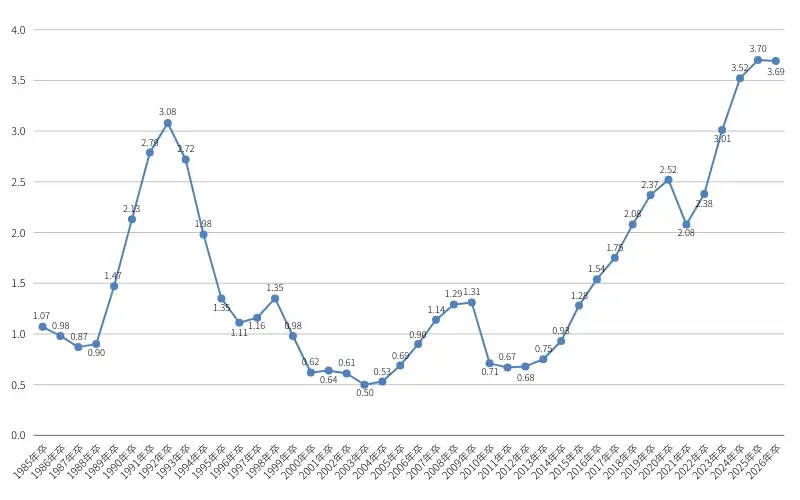
Recruit Works Institute, "The Latest Situation of Employment for High School Graduates: From an Analysis of Changes Over Time" https://www.works-i.com/column/labor-market/detail008.html
Then, choices such as the following will become stronger:
- Acquiring considerably advanced skills within university education before entering the workforce
- Going into physical work, where one can get a job without going to university
In parallel, in Japan and other countries, the tuition of universities and the return on investment of attending university are estimated to be worsening. Looking at Japan alone, there are statements such as the following.
"For university graduates in professional and technical occupations, what could be recouped in 7.9 years in 2020 became 15.0 years in 2025. For university graduates in clerical occupations, what could be recouped in 9.8 years in 2020 became 16.8 years in 2025. Because income levels are higher in professional and technical occupations, the time needed to recoup is shorter, but there is no doubt that in both occupational groups there is a clear trend of the period lengthening from 2020 to 2025.
Recruit Works Institute, "Is 'Going to University' Worth It? The Latest on Wages by Educational Background" (2026)
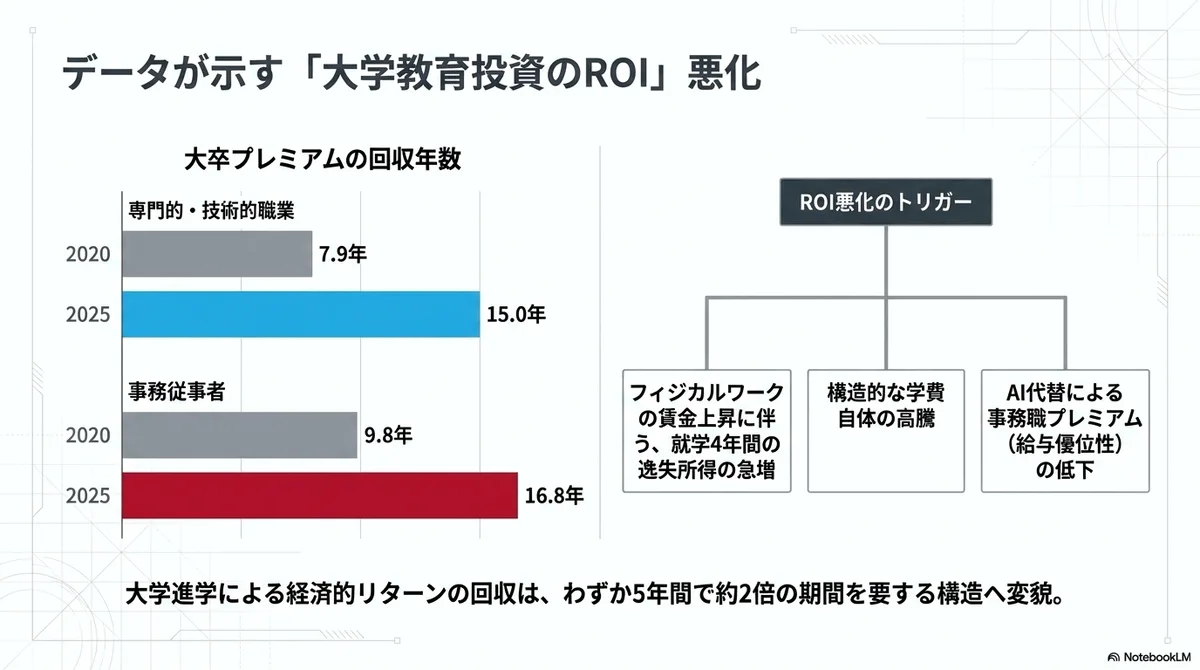
Overseas, as in the WSJ article "MBA Degrees Are on Sale in the US as Demand Slows," there is also a movement to lower tuition.
AI could further worsen the return on investment in universities.
This is because, when we think of the four years of forgone income (the income one would have earned had one been employed) as an investment toward earning a salary carrying the "university graduate" premium, then with pay for physical work rising and forgone income rising, and tuition also rising, AI would worsen the average ROI of that university education investment further. As the term "blue-collar millionaire" gains reality, forgone income rises, and the return on investment in university education worsens.
Higher education such as universities, then, will have to fight these pressures on top of Japan's declining birthrate.
Education and AI
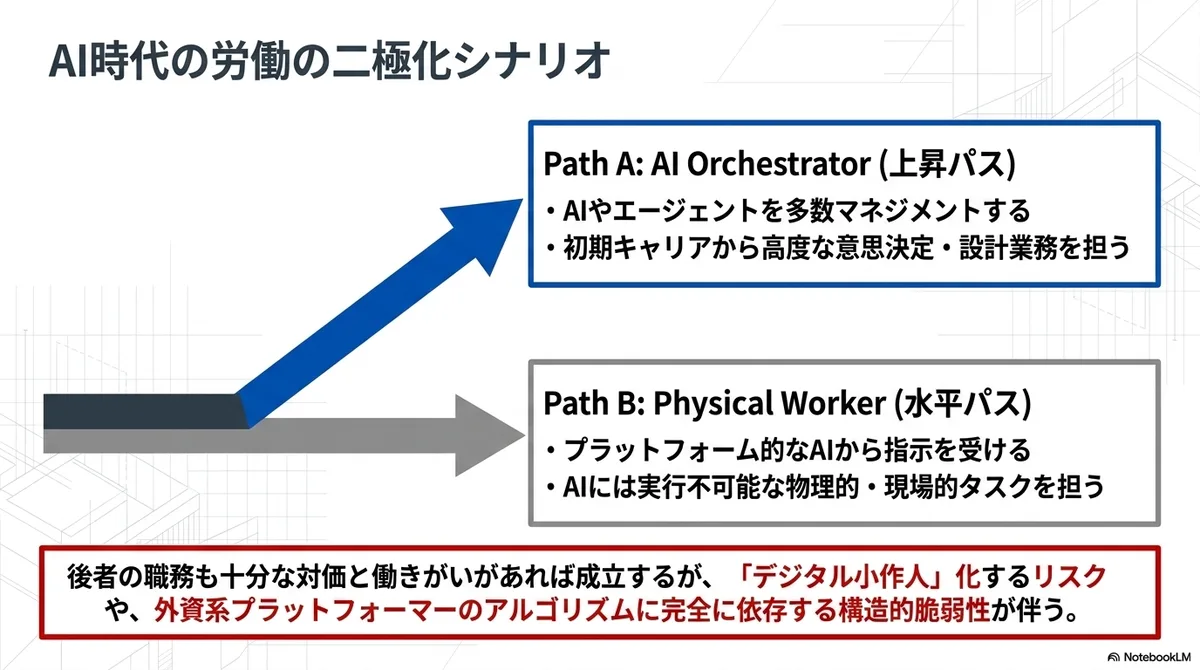
As AI develops further, it is easy to imagine AI giving instructions to humans, as today's gig-work platformers do.
In other words, young people about to enter society will become more likely to face pressure toward one of two extremes:
- Doing advanced work by using many AIs and AI agents (managing numerous AIs from the early stages)
- Being used by AI and doing physical work that AI cannot do
I think we should consider, to some extent, how to educate people for the former.
Even for the latter, there is no problem if the work is humane, pays enough, and is rewarding, but that will not necessarily be the case, and I think we need to be careful that the AI platform will not necessarily be one that pays Japan and its citizens sufficient compensation. (That said, even those on the side using AI may end up in a position like digital tenant farmers…)
The earlier point that "the entrance to careers is narrowing" is related to this. If on-the-job training shrinks, pressure builds to produce people with considerable ability by the time they graduate from university. Alternatively, along with that, the pre-employment training period may be extended, or educational institutions outside companies may take on the role of reskilling for people who have already entered the workforce.
How to incorporate AI into education on such premises seems worth thinking about, and I think that as the educational function companies once had weakens, the importance of public education will relatively increase (society will have to provide for it).
Conversely, I also think that if university education and the industrial structure remain as they are, this could lead to elite overproduction.
Accelerating elite overproduction
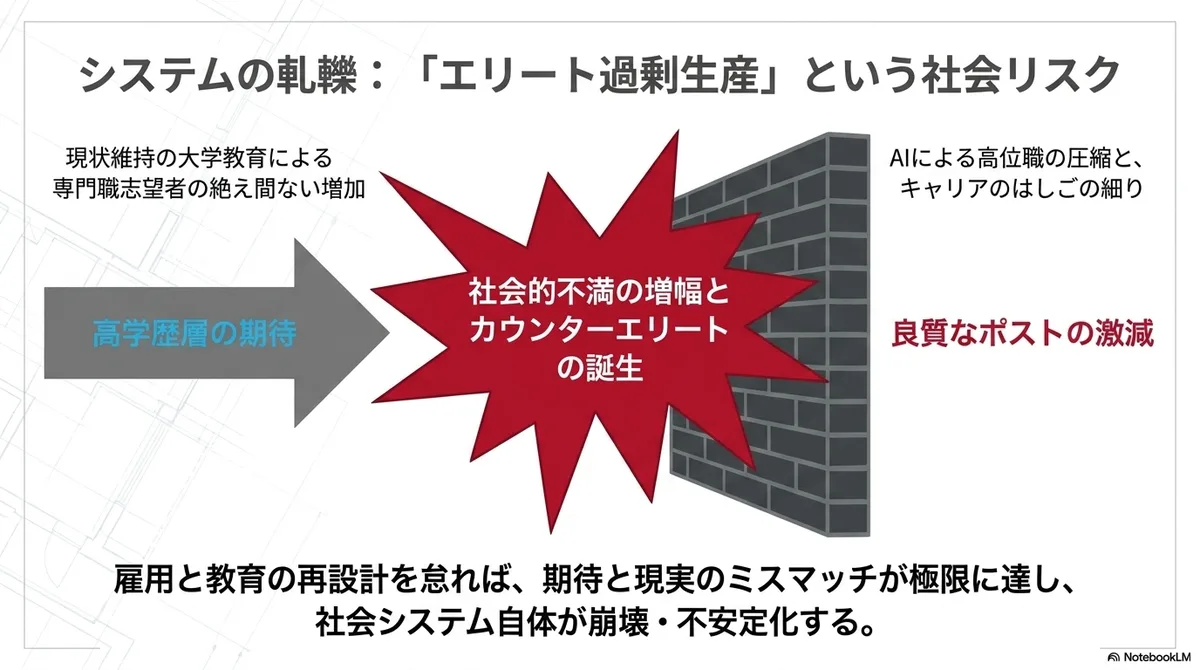
To explain elite overproduction briefly: in Turchin's structural-demographic theory, social instability advances when the worsening of ordinary people's lives, elite overproduction, and the decline of state capacity coincide. And elite overproduction is when the number of people aiming for high-status positions, such as the highly educated and those aspiring to professional careers, grows beyond the number of seats actually available.
If we choose to leave university education as it is, and
- AI relatively reduces the number of good job positions,
- narrows the entrances and ladders to work, and
- further lowers the ROI of university education,
then the situation will become relatively more "elite-saturated" than it is now. I think this could widen the gap between the expectations of the highly educated and reality, and become a factor that amplifies social discontent.
Turchin himself said in 2023 that "AI will create counter-elites." On the other hand, in an interview about Japan in 2026, he takes a cautious stance, saying that the present change, which is not accompanied by growth in the youth population, is unusual and that he does not know how it will turn out.
In any case, for Japan, AI has the benefit of "easing population decline," and that is correct in some respects, but unless employment, labor, and education are redesigned, mismatches will increase and there is ample possibility that social instability will grow. And as mentioned above, if it greatly affects jobs held by women, it will also surface as a gender issue.
Going forward
If we can expect to some extent that society will become unstable if things go on like this, then this problem must be considered not only by universities and education but by society as a whole, in terms of how to deal with it.
There is the option of after-the-fact redistribution such as an AI tax (levying a high tax on AI companies and using it as a source of benefits), but this carries implementation problems, such as how to handle tax avoidance by AI companies and political resistance, as well as side effects such as delayed AI adoption and reduced productivity gains caused by taxing AI. Realistically, I think it is better to strengthen the redistribution function while also providing for pre-distribution.
A crude direction such as "reduce the number of people who go to university" or "reduce the number of universities" can also be considered, but much physical work consists of essential domestic service industries, and while that work is meaningful, care work, education, and the like tend to be held down by officially set prices and are basically not industries that earn foreign currency, so there are limits.
Tourism is also possible, but the related services have low labor productivity and are industries where raising it is difficult. Moreover, considering that tourism relies on the surplus of social resources such as public transportation networks and cultural properties, and that maintaining or expanding those resources will probably become difficult as the population declines, promoting tourism would also become a factor that increases friction with permanent residents.
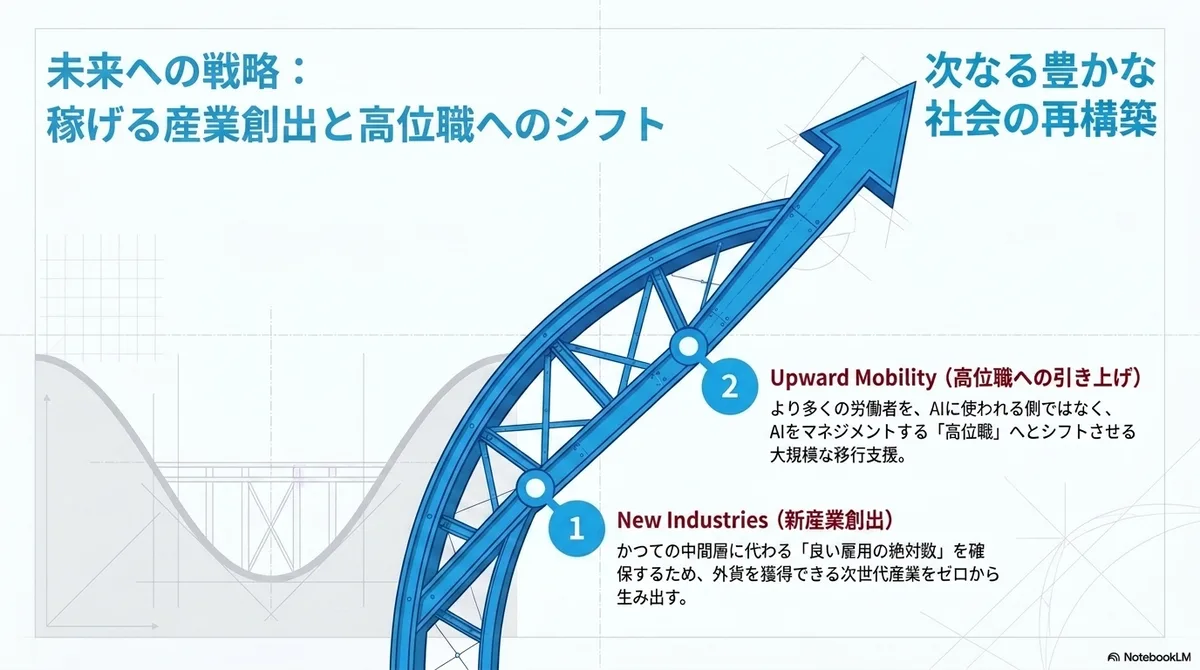
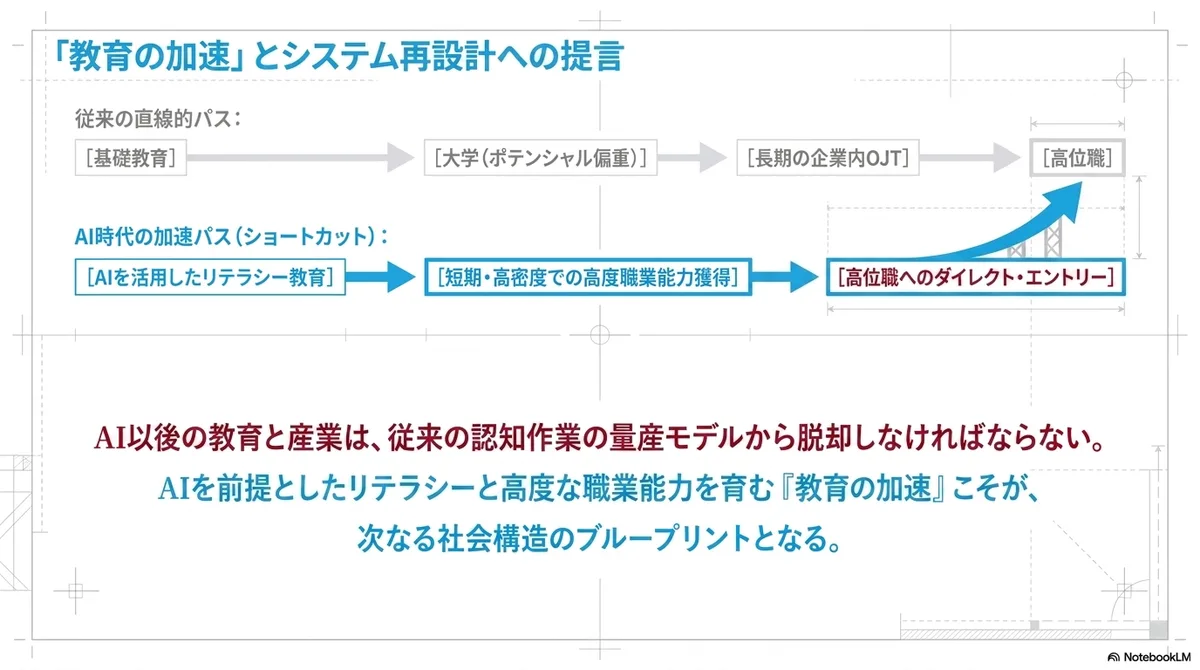
If we assume we will continue to benefit from the global economy, I think it is better to consider how to increase the "number of good jobs" that once created a prosperous middle class, build industries that can earn more, provide excellent education for that purpose, and aim to move more people into higher-tier jobs.
If higher vocational ability than before is required to enter those higher-tier jobs, education will need to change accordingly. And in that case, the value and position of public education should also change.
As I also wrote recently in the article "Accelerating Education," I am once again convinced that what is needed is education that lets people reach higher-tier jobs in a shorter time, how to incorporate AI into it, and education for literacy and vocational ability premised on AI. (Not all education is for the sake of a career, though…)
If today's secondary and higher education was built on the manufacturing model of the postwar period, after the development of electricity, and premised on producing large numbers of people who can handle cognitive work, then what should education look like after AI, and to which industries should talent be directed? I am thinking that we need to consider these points together.
In the short term, rather than keeping students from using AI, I think universities must take responsibility for thinking about how to use AI to raise students' vocational ability, while also increasing the jobs that students with such advanced skills can take (increasing such companies and industries).
And rather than simply teaching how to master AI, I think that means thinking more deeply about "what new value to create using AI," that is, thinking more deeply about the industries and companies that AI makes possible.